Are Vehicle Wraps Worth It? The Honest ROI Case
Yes, if the truck drives and parks where you work. A wrap runs a few thousand dollars, lasts five to seven years, and costs pennies per thousand views, cheaper than any ad you can buy. Here's the honest ROI case.
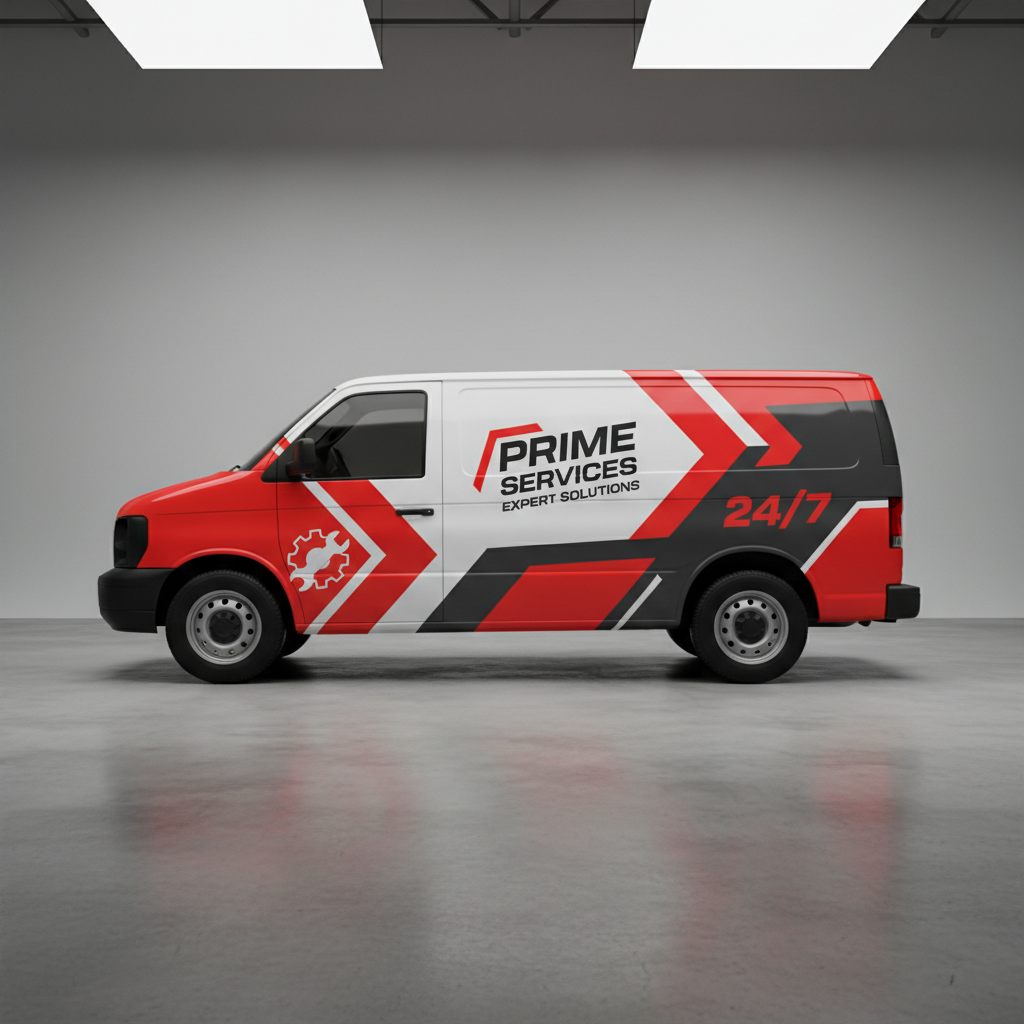
Yes, if the truck drives and parks in the neighborhoods you serve. A full wrap runs a few thousand dollars, lasts five to seven years, and works out to pennies per thousand people who see it, which is cheaper per view than any ad you can buy. My default: wrap any truck that's out working every day, and leave the one that sits in the yard alone.
The return isn't a guess, and it isn't only about impressions. A wrapped truck does two jobs at once. It racks up tens of thousands of views a day as a rolling billboard, and it turns a plain white van into something that reads like a real company the second it pulls into a driveway. One is reach. The other is trust. The wrap is the rare buy that delivers both.
The trade-off in one line: a cheap wrap that fades in two years is worse than clean lettering that stays sharp, so if you can't afford to do it right, do less. Here's the honest ROI case, how to measure it, and the one rule that decides whether the money comes back.
Are vehicle wraps worth it?
Yes for a truck that drives and parks in your service area, and no for a vehicle that sits in a yard. The wrap earns its money two ways: reach at a cost per view nothing else touches, and a trust signal that makes your truck read as an established shop instead of a guy with a magnet.
A working service truck is in driveways, at supply houses, and stuck in the same local traffic as your customers for six to ten hours a day. Every one of those hours it's advertising to the exact people who hire you, in the exact ZIP codes you serve. A vehicle parked behind a fence advertises to your own crew. That's the verdict in one move: motion and visibility are what you're paying for, so the more the truck is seen where you work, the more the wrap is worth.
What's the real return on a vehicle wrap?
The return is cost per view, and no other channel comes within an order of magnitude. Outdoor advertising impression studies put a single wrapped vehicle at 30,000 to 70,000 views a day in a metro area. Take the low end, 30,000 a day across 300 days of driving and parking, and one truck clears 9 million views in a year.
Now price it against that. Call a full wrap $5,000 with a six-year life. That's about $70 a month, and set against north of 50 million views over those six years, it comes out to roughly a dime per thousand impressions. Meta ads run $8 to $12 per thousand. A static billboard is a few dollars per thousand in most markets. Halve every number here for the skeptic in you, and the wrap still buys reach for a fraction of anything else you can run.
I break the wrap down line by line, design, print, and install, in what a truck wrap costs. For ROI the number that matters is the ratio: a one-time spend of a few thousand dollars against tens of millions of views is the cheapest reach a trade company can buy.
Do vehicle wraps work, or do people tune them out?
They work, because a wrapped truck does two things a billboard can't: it shows up where you're already working, and it makes you look like a real company at the moment a homeowner is deciding. Nobody tunes out the plumbing truck parked at their neighbor's house for two days. They read it, and some of them save the number.
That second job, the trust signal, is where a chunk of the return hides, and no impression count captures it. A homeowner comparing two bids reads the wrapped truck as the established outfit and the plain white van as a question mark. Same license, same work, different read. The wrap converts leads you'd have landed anyway, and it makes the truck at the job site sell the next job on the block. The effect compounds when the truck matches everything else you put in front of people, which is the point of a brand system, not a one-off wrap.
How do you measure whether your wrap is paying off?
Put a dedicated phone number on the wrap and ask every lead how they found you. That's the measurement system, and it costs next to nothing. A call-tracking number through CallRail or your CRM that lives only on the trucks tells you how many calls the wrap drove, kept separate from your website and your paid ads.
If a second number is a hassle, tag the source in your intake instead. Jobber, ServiceTitan, and Housecall Pro all have a "how did you hear about us" field, so train whoever answers the phone to ask it and log the answer. Watch for "saw your truck" and "you were at my neighbor's."
One honest caveat: outdoor advertising is recall, not last-click, so a wrap gets undercounted the same way a billboard does. A homeowner who stared at your truck for a week, then Googled you and called from the map, shows up in your reports as a Google lead. Don't kill the wrap because the tracked-number count looks modest. The assist is real even when the attribution is fuzzy.
Is a cheap wrap worth it?
No. A cheap wrap that fades and lifts inside two years is worse than clean lettering that stays sharp, because a peeling, sun-bleached truck tells every customer you cut corners. Negative return is a real outcome, and a bad wrap is how you buy it.
The culprit is almost always the film. A cheap quote is usually calendered vinyl with no laminate, which shrinks, lifts at the edges, and loses its reds and yellows before year three. Cast vinyl like 3M IJ180 with a matching laminate holds up the full five to seven years. Forced to choose between an $1,800 calendered wrap and clean cut-vinyl lettering, I take the lettering every time, because sharp beats faded. I put the three options side by side in wrap versus lettering versus magnets.
Getting the film and the layout right is the whole difference between an asset and an eyesore, and on a flat-rate plan the design is handled without a per-project bill each time you tweak it. See the flat-rate design pricing.
Try us free
Want it designed right, without the guesswork?
When is a vehicle wrap not worth it?
When the vehicle sits in a yard, when you're about to sell it, or when you lease it and hand it back clean. A wrap only pays off in motion and in view, so a truck parked behind a fence is spending five to seven years of billboard life advertising to nobody.
Three clear passes. A backup truck with 220,000 miles headed to auction next year won't live long enough to earn the wrap back, so letter it. A leased van you return at 36 months should get a partial or lettering you can peel, not a full wrap you throw away. And a trailer or an equipment truck that never leaves the lot is a yard-sign problem, not a wrap. Match the spend to how much the vehicle is seen where you work, and the yard queen doesn't make the cut.
What's the one thing that decides if a wrap pays off?
A phone number you can read at 30 feet. That's the rule, and it's the one most wraps break. A wrap can pile up 50 million impressions over its life and book zero jobs if the number is wrapped around a gas cap or set so small nobody catches it at a light.
Set the number big, high-contrast, on both sides and the back doors, and let it be the loudest thing on the truck. One message, one number, readable from across a parking lot. A wrap crammed with nine services and four fonts and a receipt-sized phone number spent your money on impressions and handed you no calls back. Get the number right and the layout built to your actual make and model, and everything else about the wrap starts working.
That's the piece I'd hand to a pro. A vehicle wrap designed to your exact truck, number first and matched to the rest of your HVAC brand so the van, the cards, and the signs read as one company. Your first design is free, so you can see it on your own make and model before you spend a dollar on print or install.
Keep reading
Vehicle Wraps branding & design →