How Much Does a Truck Wrap Cost?
A full van wrap runs $3,000 to $6,000 installed: design, print, and install. Here's what moves the number, full vs partial vs lettering, and where not to cut.
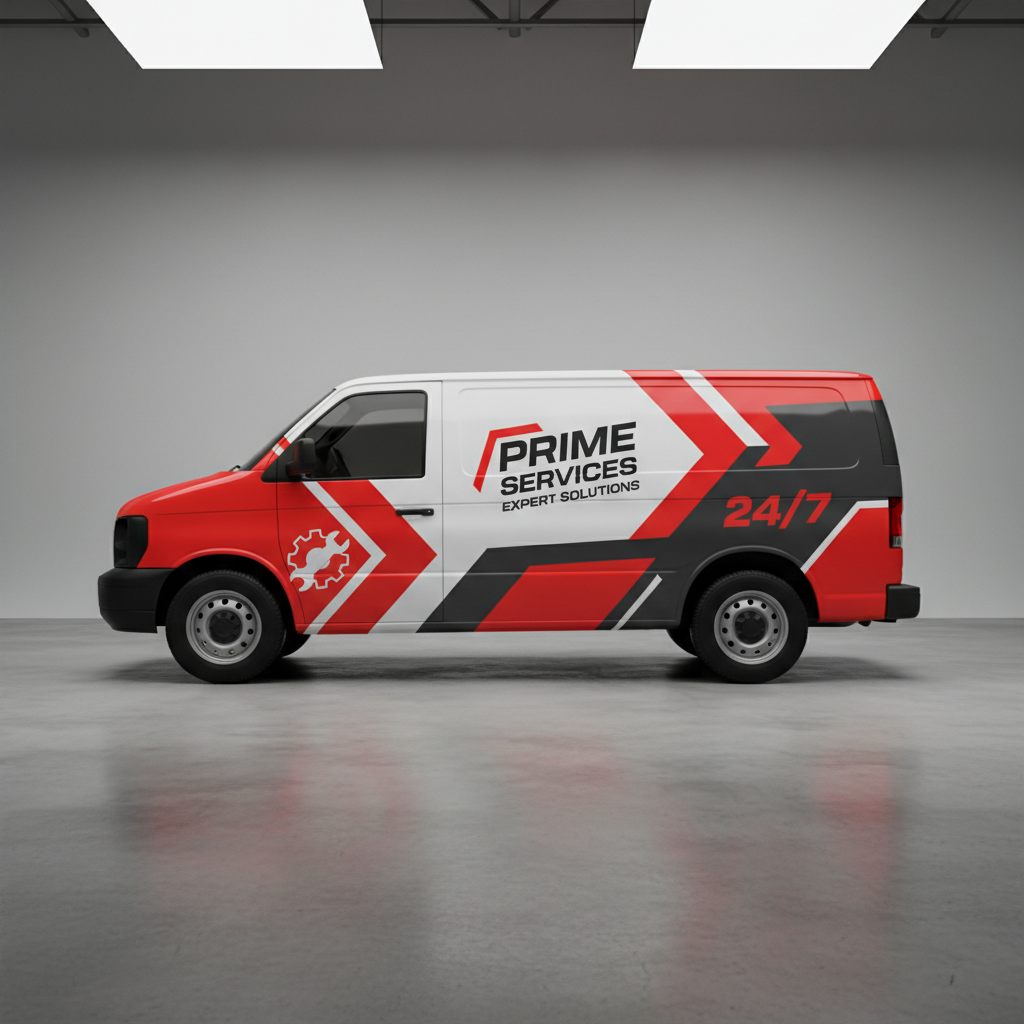
A full van wrap costs $3,000 to $6,000 installed. Design is a few hundred to about a thousand if you pay per project, print is $1,500 to $3,500, and install is another $1,200 to $2,500. A partial wrap runs $1,000 to $2,500, and plain vinyl lettering is $300 to $800.
Those are real 2026 numbers for a standard cargo van. A box truck or a dually costs more because there's more surface and more panels to cover. A compact van costs less.
Here's where the price comes from, what moves it, and where cutting cost will cost you more down the road.
How much does a truck wrap cost?
$3,000 to $6,000 for a full wrap on a cargo van, start to finish. Break it into three parts so you know what you're paying for.
Design is $300 to $1,000 per project, or it's included if you're on a vehicle wrap design subscription. Print is $1,500 to $3,500 depending on the vinyl and the square footage. Install is $1,200 to $2,500, more if the van has doors, curves, and rivets that take time to do right.
A partial wrap, meaning doors, hood, and rear panels, runs $1,000 to $2,500. Straight vinyl lettering is $300 to $800. A box truck full wrap is $4,000 to $8,000 because you're covering a lot more square footage.
Try us free
Want it designed right, without the guesswork?
What's the difference in price between a full and partial wrap?
A full wrap costs about twice a partial, and it's the better buy on a daily-driver van. Full covers the whole vehicle in printed vinyl. Partial covers the high-value panels and leaves the factory paint showing between them.
Partial makes sense in two spots: a leased vehicle you hand back clean, or an older van where you don't want to sink $5,000 into a truck with 200,000 miles. Anywhere else, the full wrap earns its money back in impressions, because the van sits in driveways and lots all day working as a billboard.
Why do two wrap quotes come in $2,000 apart?
Vinyl grade, vehicle size, and how much the installer sweats the details. Those three explain almost every gap between a cheap quote and a real one.
Ask what film they print on. You want a cast vinyl like 3M IJ180 or Avery 1105 with a matching laminate. Cast conforms to curves and lasts. Calendered vinyl is cheaper by a few hundred dollars, and it shrinks, lifts at the edges, and fades in two years. The cheap quote is often calendered with no laminate, a three-year wrap wearing a five-year price.
Size and complexity do the rest. A high-roof van, body curves, door handles, and rivets all add install hours, and hours are what you're paying for.
Is a wrap worth it compared to vinyl lettering?
A full wrap costs more up front and returns more, so on a truck that's out all day, get the wrap. Lettering is $300 to $800 and gives you a name and a number on a white van. It's fine for a backup vehicle or a tight first-year budget.
Run the math on cost per year. A $5,000 wrap that lasts six years is about $70 a month. For that, your truck is a moving billboard in the exact neighborhoods you work, 12 hours a day. Lettering can't touch it for recognition. The trade: lettering is cheaper today and you'll look cheaper doing it.
How much does it cost to wrap a whole fleet?
Per-vehicle cost drops when you wrap a fleet, because the design gets built once and reused. Budget $3,000 to $6,000 for the first van, then less per vehicle after that, since you're printing the same layout adjusted to each truck.
The move for a fleet is one design system, not one-off wraps. Build the fleet graphics as a template that adapts to a van, a pickup, and a box truck, so all of them read as one company. Ten trucks that match look like a real operation. Ten trucks with ten slightly different layouts look like ten guys who share a name.
What makes a wrap cost more than it should?
Rush jobs, redesigns, and paying a shop to fix a file that came in wrong. The wrap itself has a fair price. The overruns come from the process.
The big one is design that wasn't built to the vehicle. Hand a wrap shop a logo and a flyer, they'll lay it out fast, and your phone number ends up wrapped around a gas cap or split across a door seam. Then you pay to reprint a panel. Design to the exact make and model up front, with bleeds and cut lines, and the install goes clean the first time.
Skip the rush fee by planning two to three weeks out. Design, print, and install each take days, and squeezing them costs money.
How long does a wrap last, and what's that per year?
A cast wrap with laminate lasts five to seven years, which puts a $5,000 wrap around $70 to $85 a month. Treat it right and it hits the top of that range.
Hand wash it, skip the brush car washes that chew the edges, and park in shade when you can, because UV kills the reds and yellows first. A wrap with no laminate to save money is the one that looks tired in two years, so you pay again sooner.
Where should you not cut cost on a wrap?
On the laminate and on the design. Those two decide whether the wrap works and how long it lasts, and they're the cheapest places to save and the most expensive places to be wrong.
Laminate protects the print from UV and washing, and it's the difference between a five-year wrap and a three-year one. Design to the vehicle keeps your number readable and your layout lined up across the doors. Cut elsewhere if you must, but pay for cast vinyl, a laminate, and a layout built to the truck. If you want that handled, wrap design built to your exact vehicle is the job, and your first design is free, so you can see the layout before you spend on print and install.
Keep reading
Contractor branding & design →