Trade Show & Home Show Booths for Contractors: What Works
A home show puts you in front of hundreds of homeowners already planning projects. The booth is the whole game: one clear message from across the aisle, a reason to stop, and a way to book on the spot. Here's what works and what it costs.
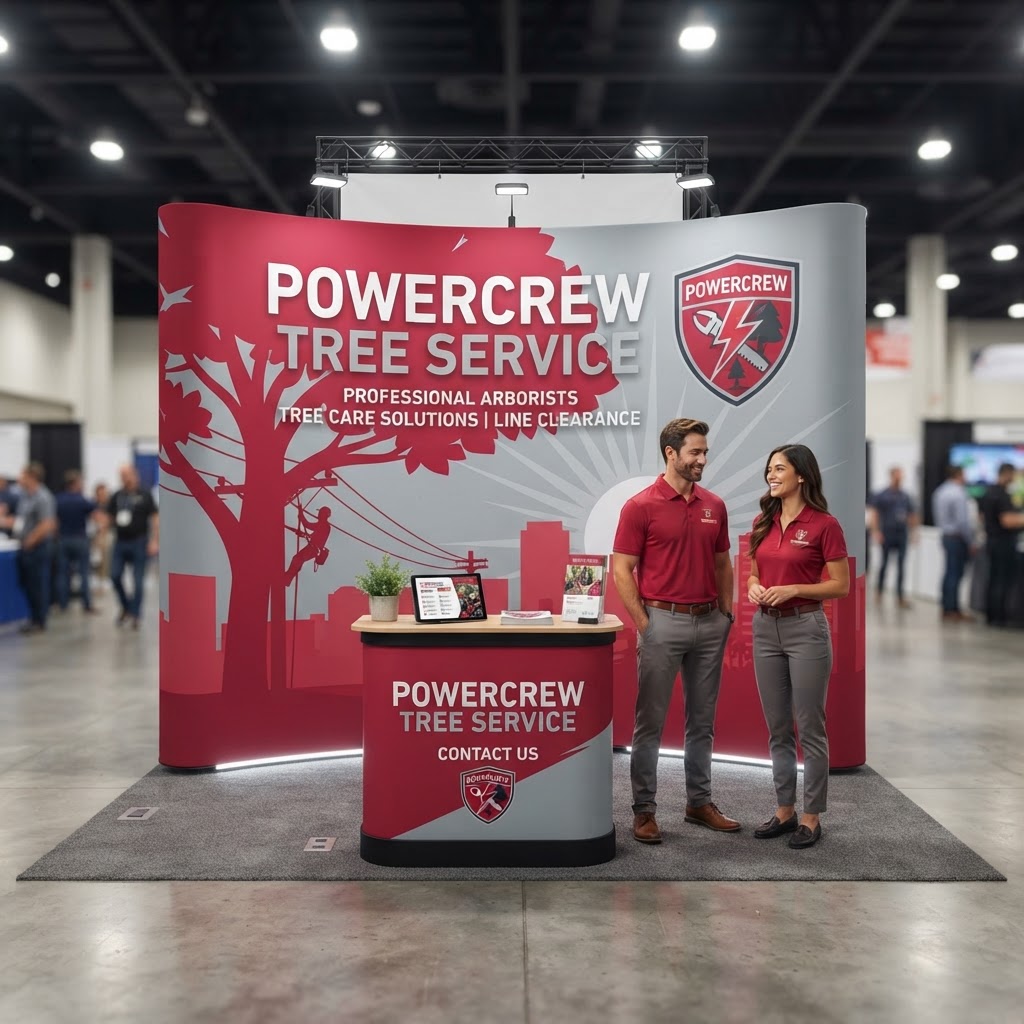
Yes, home shows and trade shows are worth it for the right contractor, but only if your booth earns a stop. A regional home show puts you in front of hundreds of homeowners who are already planning a project and walking the floor to decide who does it. That is rare, concentrated, high-intent attention. Waste it with a folding table and a stack of flyers and you paid $2,000 to be ignored.
The booth is the whole game. You have about three seconds as someone walks past, the same as a truck at 40 mph, so the backdrop has to say what you do and why you, from across the aisle, before they slow down.
Are home shows and trade shows worth it for contractors?
Yes, for trades that sell considered, higher-ticket work: remodeling, roofing, windows, HVAC replacement, solar, pools, and landscaping. A homeowner planning a $20,000 project wants to meet the company, not just click an ad, and a show is where they do it. For low-ticket, same-day service work like a clogged drain or a broken spring, shows are a weaker fit, and your money does more on a truck wrap and a fast website.
Pick the show by who walks it. A local home and garden show full of homeowners beats a generic business expo every time. Ask the organizer for last year's attendance and who attended before you write the check.
What makes a trade show booth actually work?
One message, read from across the aisle. The most common booth mistake is treating the backdrop like a brochure: ten services in small text nobody reads while walking. Say the one thing you want known ("Kitchen and bath remodels, done in weeks not months") big enough to read from 15 feet, put your logo and a short proof point beside it, and let the conversation fill in the rest.
The pieces that carry a booth: a clean tension-fabric backdrop, one or two retractable banners to frame the space, a matching table runner, and something visual, before-and-after boards or a screen looping your best projects. It should all look like one company, which means it should match your vehicle wraps and yard signs and the rest of your brand, not a one-off set of show graphics.
Try us free
Want it designed right, without the guesswork?
What should the booth backdrop say?
The outcome, not the service list. "We finish basements" is fine; "The basement your family actually uses, finished in six weeks" is better, because it sells the result the homeowner is picturing. Keep the wall to a headline, your logo, and one line of proof (years in business, a rating, a guarantee). Everything else goes on the takeaway, not the backdrop.
What does a trade show booth cost?
Booth space at a regional home show runs about $1,000 to $3,000 for a standard 10 by 10, more for a corner or a larger footprint. The graphics cost less than people expect and last for years: a retractable banner is $150 to $300 printed, and a tension-fabric backdrop runs $400 to $900. Design is the part that decides whether any of it works, and booth and banner design is included in a trade show and large-format signage plan with no per-project fee, so the only hard cost is the printing and the booth fee.
How do you turn booth traffic into booked jobs?
Book on the floor, don't collect business cards you will never call. Put a tablet or a simple sign-up at the booth and set the appointment while they are standing there and interested. A show-only offer with a deadline ("book a consult this weekend and save $250") moves the fence-sitters. Then follow up within 48 hours, because the homeowner talked to four companies that day and remembers whoever calls first.
The contractors who lose money at shows treat the booth as a formality and wing the follow-up. The ones who profit design the booth to stop people, capture the appointment on the spot, and chase every lead fast. Build the booth to do that, and a single weekend can fill your calendar for a month. Start with a booth and banner design that commands the floor, and your first design is free.