Door-to-Door Solar: Canvassing and Leave-Behinds
Canvassing still works in solar, and a photocopied flyer still undoes a good knock. The homeowner deciding on a $30,000 system reads your leave-behind as proof of whether you'll last. Here's the field sequence, the neighborhoods, and what the leave-behind must say.
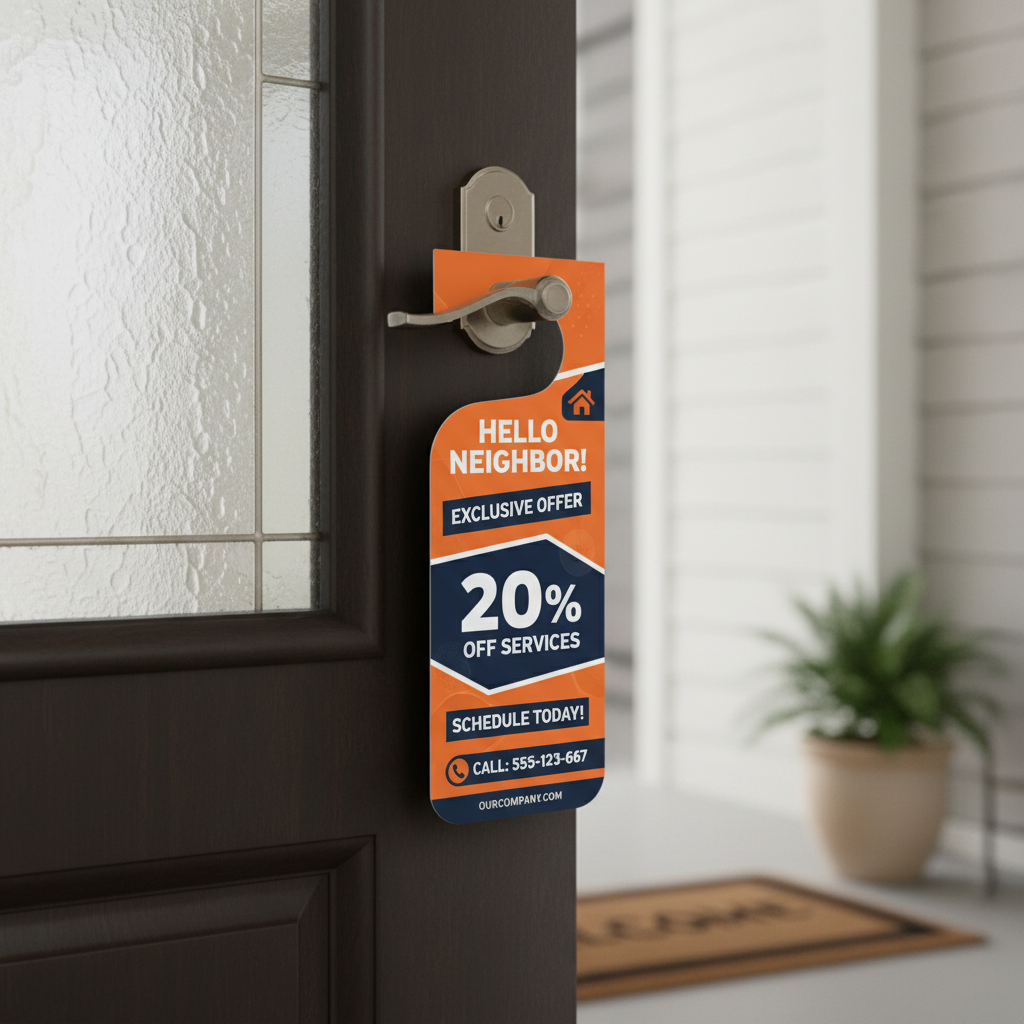
Door-to-door solar still works, and a cheap leave-behind still ruins a good knock. You can run a clean, respectful canvass that books real assessments, but the piece you leave on the door has to look like the company asking a homeowner to trust it with $30,000 for 25 years. A strong knock followed by a photocopied flyer with a phone number scrawled on it tells the homeowner exactly what they fear, that you will not be around when the warranty matters.
Canvassing earns its place in solar because the product is invisible until someone explains it. Almost nobody is searching for solar, so knocking is one of the few ways to create demand face to face, in the neighborhoods where the roofs and the bills make sense. The installers who do it well treat it like the skilled field work it is, not a numbers game of harassing every door on the map.
Here is the sequence, run it in order.
Does door-to-door solar canvassing still work?
Yes, when it is done with a real route, a soft ask, and a leave-behind that looks professional, because solar is a product people need shown to them. The homeowner is not searching for panels, so a well-run knock puts the idea in front of them at the door, with a neighbor's install as proof. What has stopped working is the aggressive, spray-every-door, high-pressure canvass that gave solar sales its bad name and gets cities to pass no-knock rules. The version that works is targeted, local, and low-pressure: you are booking a sit-down assessment, not closing a $30,000 sale on the step. The trade-off is honest: canvassing is slower and more disciplined than buying a list of leads, and it produces exclusive appointments that cost you nothing but shoe leather and a good door hanger.
How do you run a solar canvassing route?
Work the six steps in order, because canvassing that skips the targeting and the follow-up is annoying strangers.
- Territory. Pick neighborhoods by roof age, sun exposure, homeownership, and bill size, not by what is closest to the office. Owner-occupied homes with unshaded south-facing roofs and high summer bills are the target; renters and shaded lots are wasted knocks.
- Timing. Knock late afternoon to early evening on weekdays and midday on weekends, when people are home. Before 10am or after dusk gets you doors slammed and complaints filed.
- The knock. Keep it short and local, and do not pitch on the step. Name the street, name the neighbors who went solar, and ask one question instead of launching into a monologue.
- The ask. Book the assessment, do not sell the system. "Can I show you what your neighbors are saving?" books a sit-down; "Do you want to buy solar?" gets a no at the door every time.
- The leave-behind. Every door gets a real door hanger, whether they answered or not, with the offer, a big number, and a QR code to your reviews. The no-answers are follow-up leads, not lost ones.
- The follow-up. Log every door and follow up within days, because the solar decision takes weeks and the homeowner who waved you off Tuesday may call Friday once the bill arrives.
What should a solar door hanger or leave-behind say?
It has to carry the offer, the proof, and the trust signals in one glance, because the homeowner reads it after you have walked away. Keep it to the essentials that make a $30,000 company look real:
- Who you are and that you are local. A local address or "locally owned since [year]," because local is half the trust in solar.
- One offer. A free solar savings estimate or roof assessment, not a wall of services.
- A big phone number and a QR to your Google reviews. The reviews close the nervous ones while you are down the block.
- The trust line. Licensed, insured, years in business, and the warranty you stand behind, because a 25-year promise needs a company that looks like it will last.
- A clean, branded look. It has to match your truck, your shirts, and your site, so the whole impression reads as one established company.
Try us free
Want it designed right, without the guesswork?
How do you pick the right neighborhoods to canvass?
Target owner-occupied homes with newer unshaded roofs and high electric bills, because those are the only doors where solar pencils out fast enough to close. A homeowner with a shaded lot, an old roof due for replacement, or a rental is a dead knock no matter how good your pitch. Read the neighborhood before you walk it: subdivisions built 10 to 20 years ago tend to have roofs with life left and bills big enough to motivate, and a metro like Phoenix or a market like Tampa has the sun and the rates that make the savings real. Pull permit and utility patterns if you can, watch for south-facing roofs, and skip the streets where the math does not work. A tight route of 100 good doors beats 400 random ones.
Why does a cheap flyer cost you the $30,000 job?
Because the leave-behind is the only piece of you the homeowner holds while they decide, and a photocopied flyer says "fly-by-night" louder than your knock said "trust me." The buyer is weighing a 25-year commitment from a company they met at the door 20 minutes ago, so every signal of permanence matters, and a cheap piece undercuts everything the conversation built. A clean, printed solar door hanger or flyer on heavy stock, matched to a real logo and brand, tells the same homeowner you run a business that will outlast the warranty. The knock opens the door. The leave-behind is what they hold in their hand at the kitchen table when they decide whether you are real.
Run a tight route, ask for the assessment instead of the sale, and leave something behind that looks like the company you want to be. Keep the hanger, the truck at the curb, and the proposal matched to the rest of your solar brand so the whole impression reads as one lasting company. Your first design is free, so you can put a real leave-behind in a homeowner's hand before you commit to a print run.
Frequently asked questions
- Is door-to-door solar sales legal?
- In most places yes, but rules vary by city. Many require a solicitation permit, honor no-knock and Do Not Knock registries, and limit hours, so check local ordinances before you send a crew out and expect fines around $100 to $500 per violation where you skip the permit.
- What is the best time to canvass for solar?
- Late afternoon to early evening on weekdays and midday on weekends, roughly 4pm to 8pm, when people are home from work. Knocking before 10am or after dark gets doors slammed and complaints filed.
- Do solar door hangers work?
- Yes, as the leave-behind on a targeted canvass, not as a mass drop. At $0.10 to $0.30 a hanger they cover the no-answers and the follow-ups, but they only convert when the neighborhood is targeted and the piece looks professional.
- How many doors does it take to book a solar appointment?
- On a well-targeted route, plan on roughly 50 to 100 doors per booked assessment, far fewer than a random neighborhood. Picking homes by roof, sun, and bill size is what moves that number in your favor.
Keep reading
Solar branding & design →