Roofing Yard Signs: Do They Work, and What Goes on Them?
A new roof is the most public job on the street, and roofs age in clusters. A $10 sign out front turns the block into calls, and after a storm the roofer who floods the affected streets first wins.
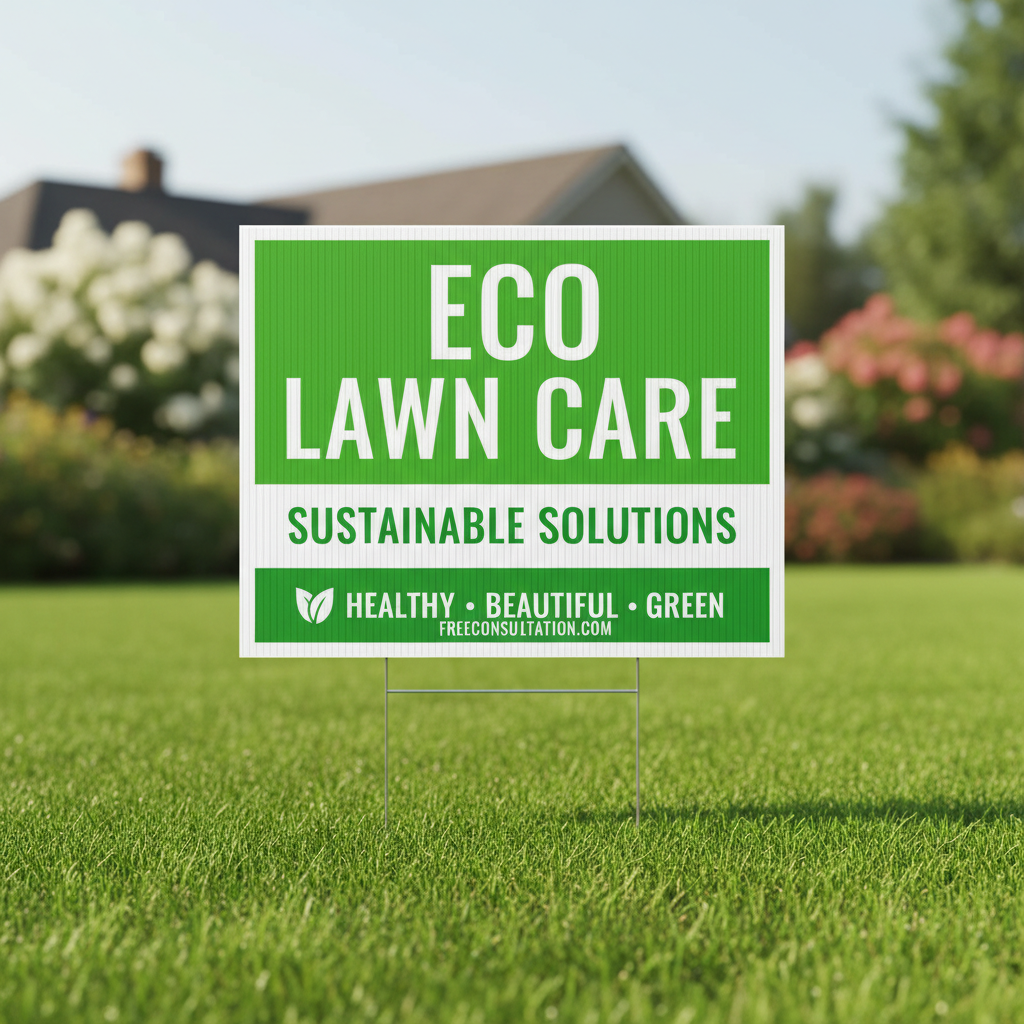
A new roof is the most public job in the neighborhood. Your crew is up top all day, the tear-off is loud, the dumpster sits at the curb, and by dinner the whole street knows someone got a new roof. A $10 yard sign out front turns that free attention into a name and a number, the cheapest lead source a roofer has.
What sets roofing apart is timing: roofs age in clusters, and after a storm a whole subdivision needs work in the same month. Put a sign on every roof you finish, flood the storm-hit streets fast, and they compound in a way no other trade gets. Here's how to run them.
Why are yard signs a roofer's cheapest lead source?
At $8 to $15 a sign, one out front of a finished roof turns a street full of witnesses into calls, with no monthly fee and no bid war. Roofing is loud, all-day, visible work, so half the block already watched your crew and clocked that the house next door got a fresh roof. The sign catches the neighbor with the 15-year-old roof while they're doing the math, and hands them proof plus a phone number for the price of a coffee.
Why do roofing yard signs compound faster than for other trades?
Because roofs age in clusters: a subdivision built the same year needs roofs across the same stretch of years. One sign on one finished roof sits on a street full of roofs the same age, so it's the right message on the right block, not a random impression. Run one on every roof and it stacks: ten roofs a month is ten signs across ten streets, and the neighbor who sees your name on three lawns in the same zip reads you as the established local choice.
How should you use yard signs after a storm?
Flood the affected neighborhoods fast, a sign on every roof you land, because the whole area is shopping at once and the first recognizable local name wins. A hailstorm turns one subdivision into 40 roofs that all need work in the same month, and the roofer whose signs already stand on three nearby lawns looks permanent while the out-of-town chasers look like the strangers they are. Have signs printed and stacked before the season, not ordered the week after the hail, because your signs on real lawns are the local proof a chaser with a magnet can't fake.
Try us free
Want it designed right, without the guesswork?
What goes on a roofing yard sign, and what gets cut?
Your company name, "Roofing," a huge phone number, "licensed and insured," and a QR code, and nothing else. A sign gets about three seconds from a passing car, so it works like a billboard, not a brochure: set the number as the biggest element after the logo, readable from the street. "Licensed and insured" earns its place for the same reason it's on the truck, because storm season fills the area with crews homeowners don't trust. Cut the service list and the clip art, because white space is what makes the number readable at 30 feet.
What should you print roofing yard signs on, and how big?
18x24 or 24x36 inches, double-sided on 4mm coroplast, on a galvanized H-stake. That's big enough to read from the road, cheap enough to run on every roof, and tough enough to take the same wind and rain you're up there repairing. Double-sided so it reads both directions of traffic, and the H-stake pushes into a lawn in seconds. For a permanent spot at the shop, step up to aluminum, but for job-site signs you reuse across dozens of roofs, coroplast is the call.
How long should a sign stay up, and how many should you run?
Leave it up two to four weeks while the roof is fresh proof, then pull it before it fades, because a sun-bleached sign says "old news" instead of "new roof." Run one on every roof you finish and every storm street you can get permission for, since volume is where signs pay off for roofers. Ask when you sign the contract, not when you leave, so it's expected. Print a clean, bold roofing yard sign built to read from the curb and matched to the rest of your roofing brand, and run it on every roof. Your first design is free, so you can see it big before you print a stack.
Keep reading
Roofing branding & design →