Roofing Marketing That Books Jobs and Beats the Chasers
Catch the homeowner the moment a storm or an old roof forces the call, and look established enough to beat the out-of-town crew. Here's the channel ranking, the real budget, and where roofers burn cash.
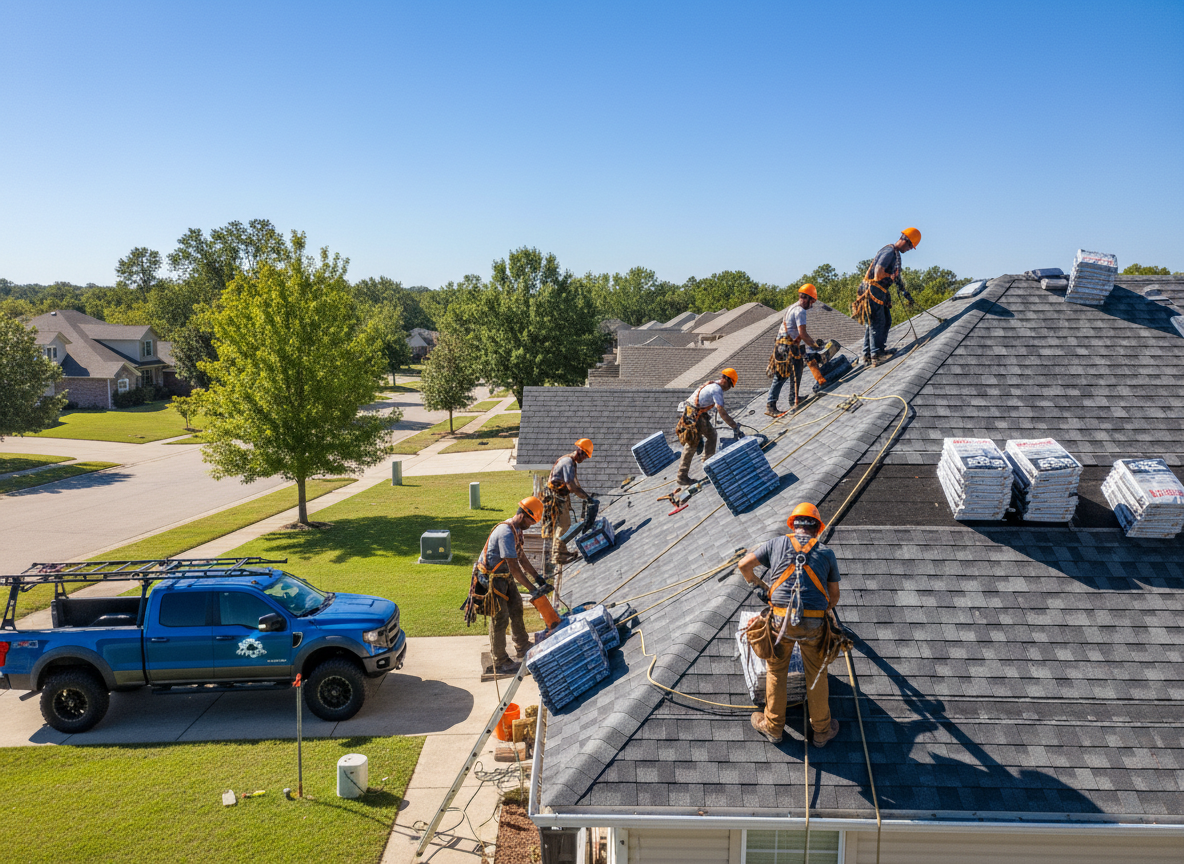
Here's the default I'd run for almost any roofing shop: work your Google Business Profile hard, chase reviews on every completed job, run Google Local Services Ads to sit above the map, put a yard sign on every roof you finish, and after a storm point Facebook and Instagram at the hail zips. Underneath all of it, look permanent and local, because that's the one thing the out-of-town crews parked down the street can't fake. Budget 5 to 10 percent of revenue, roughly $3,000 to $12,000 a month once you're serious.
Roofing marketing is two jobs stacked on each other: catch the homeowner the moment a storm or an old roof forces the decision, and look established enough that they trust you over the chaser. The ticket is $9,000 to $25,000 and the buyer has been warned about scammers, so both halves matter. Get them right and you stop competing on price.
That's the playbook. Now the reasoning, the numbers, and where roofers light money on fire.
What's the best way to market a roofing company?
Own your Google Business Profile, stack reviews on every job, run Google Local Services Ads, and put a yard sign on every finished roof, all while looking like the established local shop instead of a chaser. That combination catches the homeowner at the moment of need and clears the trust bar at the same time, which is the whole game in a trade where the ticket is $9,000 to $25,000 and the buyer is scared of getting burned. Everything else, Google Ads, Meta, door-knocking, financing, is a lever you add on top once those four are running. If you do nothing else this quarter, get the profile filled out, the reviews flowing, and a sign in every yard.
Why is roofing marketing different from other trades?
Because demand is driven by storms and old age, not by you, and the buyer is terrified of hiring the wrong crew. A plumber creates demand with a maintenance plan; you can't make it hail. Roofs get replaced when a storm tears one up or a 20-year shingle finally gives out, so your job is to be the name in front of the homeowner at that exact moment, not to talk someone with a good roof into a new one. Two things follow from that. The ticket is high, $9,000 to $25,000 for a re-roof, so a homeowner vets hard and shops slowly. And the trade is crawling with storm chasers and fly-by-night crews, so a big share of your marketing goes to looking established enough that the homeowner picks you over the truck with the magnet sign and the out-of-state plates. Insurance work layers on top, because a lot of roofs get paid through a claim, so "we work with your insurance" is a line that books jobs.
Which marketing channels book roofing jobs?
Five, in the order I'd fund them: Google Business Profile with reviews, Google Local Services Ads, yard signs and door-knocking on every storm street, Facebook and Instagram aimed at storm zips, and Google Search ads. Here's what each one does.
- Google Business Profile and reviews. Free, and it's where "roofer near me" and "roof replacement [your city]" land. Set the primary category to Roofing Contractor, fill every field, load real project photos, and ask for a review the day you pull the dumpster. Review count and recency move you up the map more than anything else you can do without paying.
- Google Local Services Ads. You pay per lead, not per click, and sit at the top with a Google Guaranteed badge, at $1,500 to $3,000 a month for one location. That badge does real trust work in a trade full of scammers.
- Yard signs and door-knocking. A yard sign on every finished roof turns one job into leads from the neighbors who watched the work, at $8 to $15 a sign. After a storm, canvassing the hit streets with a door hanger is one of the highest-return moves in roofing.
- Facebook and Instagram. Meta ads targeted to storm zip codes put a "free storm inspection" offer in front of the exact neighborhoods that took hail, days after it lands. Not for the person mid-emergency, for the homeowner deciding over the next two weeks.
- Google Search ads. The most expensive lever in roofing, worth it once the free and per-lead channels are maxed. More on that cost below.
How much should a roofing company spend on marketing a month?
Budget 5 to 10 percent of revenue, which for most shops lands between $3,000 and $12,000 a month, weighted toward Google and reviews. A shop doing $1.5 million a year running lean spends around $6,000 to $12,000 a month; a newer shop can start at $2,000 to $3,000 and grow it with the pipeline. Roofing is one of the priciest categories in Google Ads, with clicks that run $10 to $50 and a booked lead that can cost $75 to $250, so if you pour the whole budget into Search before your profile and reviews are strong, you overpay for every call. Fund the free and per-lead channels first, then add paid search with what's left. The trade-off in one sentence: spending less than this keeps you invisible in a crowded storm market, and spending it all on Google Ads before the reviews are there means paying premium prices to look like everyone else.
How do you beat storm chasers and fly-by-night crews?
Look permanent and local everywhere the homeowner can see, because that's the one thing an out-of-town crew can't produce in a weekend. The morning after a hailstorm, a homeowner stands in the driveway sizing up every truck that showed up overnight, sorting the roofer who'll answer the phone in five years from the crew that'll be two states over by fall. You win that sort with signals a chaser can't fake: a wrapped or cleanly lettered truck with a local number, a Google Business Profile full of local reviews, a real website instead of a Facebook page, yard signs already standing down the block, and "licensed, bonded, and insured" plus a GAF Master Elite or Owens Corning Preferred badge where they can read it. After the spring 2024 hail hit the Dallas-Fort Worth suburbs, the roofers who cleaned up were the ones who already had the trucks, signs, and reviews in place before the sky opened, not the ones scrambling to look real afterward. Looking established also lets you hold a 10 to 20 percent premium over the chaser's bid, because the safe choice is worth more than the cheap one when the downside is a leak over the bedroom.
How do you market a roofing business right after a storm?
Get to the hit neighborhoods within days with signs, door hangers, boots on the ground, and Meta ads pointed at the storm zips. A hailstorm opens a two to three week window where every homeowner on the affected streets is thinking about their roof at once, and the roofer who shows up first and looks legitimate books the most work. Canvass the streets that took the worst of it with a door hanger offering a free inspection, put a yard sign on the first roofs you close so the neighbors see you're already working the block, and run a storm-zip Facebook and Instagram campaign so your name is on their phone the same night. Pull permit data or use a hail map to find the exact zips. The move that fails here is waiting a week to design a flyer, because by then the chasers have knocked every door and the window is closing.
Try us free
Want it designed right, without the guesswork?
Should a roofing company offer financing?
Yes, because a $9,000 to $25,000 roof is a number most homeowners can't write a check for, and a monthly payment turns a "let me think about it" into a signed contract. Financing through a provider like Service Finance or GreenSky lets you present the job as $180 a month instead of a $15,000 lump, which lifts both your close rate and your average ticket, since a homeowner who's approved will often move up to the better shingle or add the gutters. Put "financing available" on the truck, the yard sign, the website, and the estimate. The one caution: dealer fees on financed jobs run 3 to 8 percent, so price that in rather than eating it. For work outside an insurance claim, financing is one of the highest-leverage offers you can put in front of a homeowner.
What roofing marketing should you skip?
Buying shared leads from a broker, running Google Ads before your reviews are strong, and a bargain template website with stock photos of somebody else's roof. Shared-lead services sell the same homeowner to four roofers at once, so you pay premium money to lose a race three times out of four, and you build nothing you own. Google Search ads before you have reviews and a real Google Business Profile means paying $75 to $250 a lead to send clicks to a page that doesn't convert, when the free channels would have caught the same person cheaper. And a bargain template site with stock roof photos screams "small and temporary" to a homeowner already on guard for chasers, which loses the job before they read a word. Put that money into reviews, signs, and a real site.
Get the Google Business Profile working, the reviews flowing, a yard sign on every roof, and a real site that looks established, and you're in the local pile before the chasers finish unloading. Tie your review requests to your CRM so every completed job triggers the ask, since AccuLynx and JobNimbus both do this. Build the whole system, the roofing brand and marketing and a fast website with storm landing pages, to one standard so the truck, the sign, and the site read as one permanent local company. A flat-rate design plan keeps it consistent for one monthly cost, and your first design is free, so you can see it before you spend on print or ads.
Keep reading
Roofing branding & design →