Roofing Flyers: The Post-Storm Mailer That Books Inspections
The flyer that pays is a double-sided 8.5x11 mailed by EDDM to the ZIP routes a storm hit, built around one offer. It reaches 5,000 boxes your crew will never walk, for about $0.20 to $0.25 a home. Here's what to put on it and when to send it.
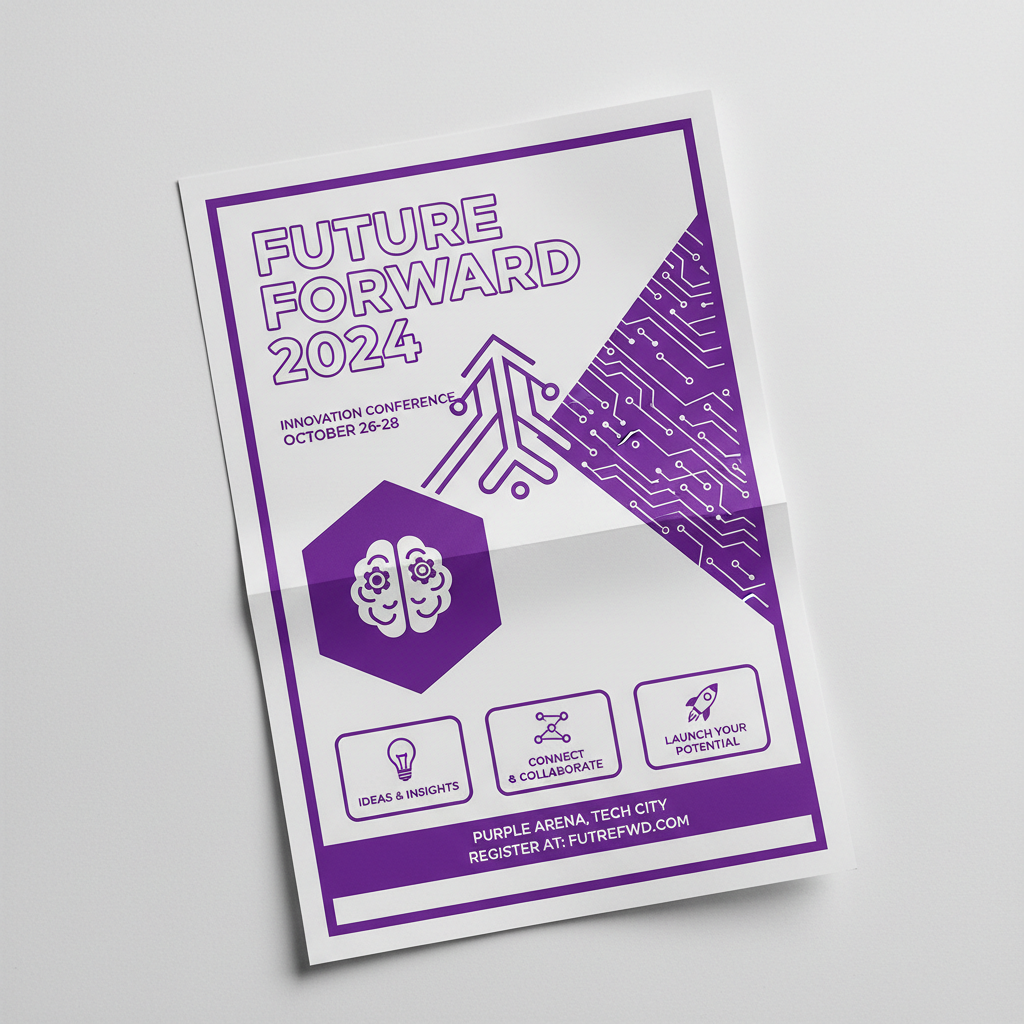
For a roofer, the flyer that pays is a double-sided 8.5x11 mailed by EDDM to the ZIP routes a storm hit, built around one offer: a free inspection, or financing on a full replacement. That is the piece I print first when a client wants reach. It is not the door hanger, and it is not a full sheet listing eight services. One sheet, one offer, mailed to every mailbox on the routes your crew can't walk, for about $0.20 to $0.25 a home in postage plus a nickel to fifteen cents to print.
The flyer roofers burn money on is the pretty one with three fonts, a stock roof photo, and no offer, sprayed across a whole city in calm weather. That is confetti. A good flyer runs on the same rule a good door hanger does, right routes in a tight window, and it does the one thing hand-hanging can't: it reaches five thousand boxes in a week with no crew on foot.
Do roofing flyers still book jobs?
Yes, when one offer lands in the right ZIP inside the two to three weeks after a storm, a mailed roofing flyer books inspections at a lower cost per lead than paid search. Roof damage hits a whole street the same afternoon, so a flyer to every box on the affected routes reaches people who need a roof this month, not a random mailbox in a dry stretch. The sheet sits on the kitchen counter for the two or three days it takes a homeowner to decide to call, which a knock never does.
When should a roofer use a flyer instead of a door hanger?
Use the flyer for reach and the hanger for the street you are standing on. The door hanger is a hand-hung, we-were-next-door touch on the forty houses around a job you finished. The flyer is what you mail when you want a whole subdivision and can't spare a crew to walk it, and it has room the hanger does not: a back side for a before-and-after, a financing table, and your review stars. Run both. Hang the streets your trucks are on, mail the routes they won't reach before the chasers do. The trade-off: the flyer costs postage the hanger skips, and it buys reach the hanger never will.
What should a roofing flyer say to book an inspection?
One offer, a phone number you can read from across a kitchen, "licensed and insured," and local proof. Lead the front with the offer ("Free Storm Damage Inspection") and the number, then the local line, "We're on roofs in your neighborhood this week." The back is where the flyer wins the room a hanger never has: a real before-and-after from a job you finished, a plain financing line ("$0 down, monthly payments on a full replacement"), and a QR code to your Google Business Profile reviews. Cut the eight-service list and the clip-art shingles. The same flat artwork posts to Meta and drops into a Google Business Profile update, so one design also works your feed, which a die-cut hanger never will.
What size and paper should a roofing flyer be?
An 8.5x11 double-sided sheet on 100lb gloss text for hand-outs, bumped to 100lb gloss cover or 14pt card for anything you mail so it survives the mail stream. Size decides EDDM: USPS only gives you the flat postage rate on a piece whose short side clears 6.125 inches, which rules 4x6 and 5.5x8.5 out of the mailbox even though they are fine in the hand.
The spec sheet I hand a roofer:
- Size: 8.5x11 or 6.5x9 for EDDM, 5.5x8.5 or 4x6 for hand-outs and bag-stuffers.
- Stock: 100lb gloss text for hand-outs, 100lb gloss cover or 14pt card for mailed pieces.
- Sides: both, always. The back is free real estate.
- Bleed: 0.125 inch on every edge, art at 300 dpi so the roof shot is sharp, not mushy.
- Color: full CMYK, one bold brand color the eye lands on first.
Try us free
Want it designed right, without the guesswork?
How does EDDM work for a roofing flyer, and what does it cost?
EDDM (Every Door Direct Mail) mails every address on the carrier routes you pick, with no mailing list to buy, for about $0.20 to $0.25 a home in postage. You choose routes by ZIP on the USPS EDDM online tool, target the hit subdivisions, then bundle the flyers with the USPS paperwork and drop them at the post office. EDDM Retail caps you at 5,000 pieces per ZIP a day, no permit required. All in, print at $0.05 to $0.15 plus postage lands a 1,000-home route around $250 to $400, cheaper per piece than a die-cut door hanger because a flat sheet prints faster. One $18,000 roof off a single route pays for a year of mailing, so the number that matters is cost per booked inspection. A flat monthly design plan covers the art, so a fresh storm means a new drop date, not a new design bill.
How fast do you have to mail flyers after a storm?
Get them into boxes inside the two to three week window when homeowners file claims and adjusters roll, which means the art is built and a printer is lined up before the season, not after the hail. EDDM carries lead time a knock does not: print turnaround runs a few business days, then the bundles take a day or two to hit boxes, so a flyer ordered the Monday after a storm can land after the chasers have half the street signed. A roofer working North Texas going into the 2023 hail season who kept EDDM art on file can mail a hit ZIP the same week it happens, while the shop starting from a blank page waits on a designer. Keep the art and a route plan ready, and the only call after a storm is where to drop.
Print a clean roofing flyer and EDDM mailer built around one offer and matched to the rest of your roofing brand, so the mailed sheet, the truck at the curb, and the hanger on the next street all read as one local company. Your first flyer design is free, so you can put a real piece in front of a hit neighborhood before you pay for print.
Keep reading
Roofing branding & design →