Roofing Facebook Ads: The Storm-Season Meta Playbook
Meta is one of the few paid channels that works for roofing. Target the storm ZIPs, put real before-and-after roofs behind a free-inspection offer, and send the click to a fast page. Here's the playbook and the budget.
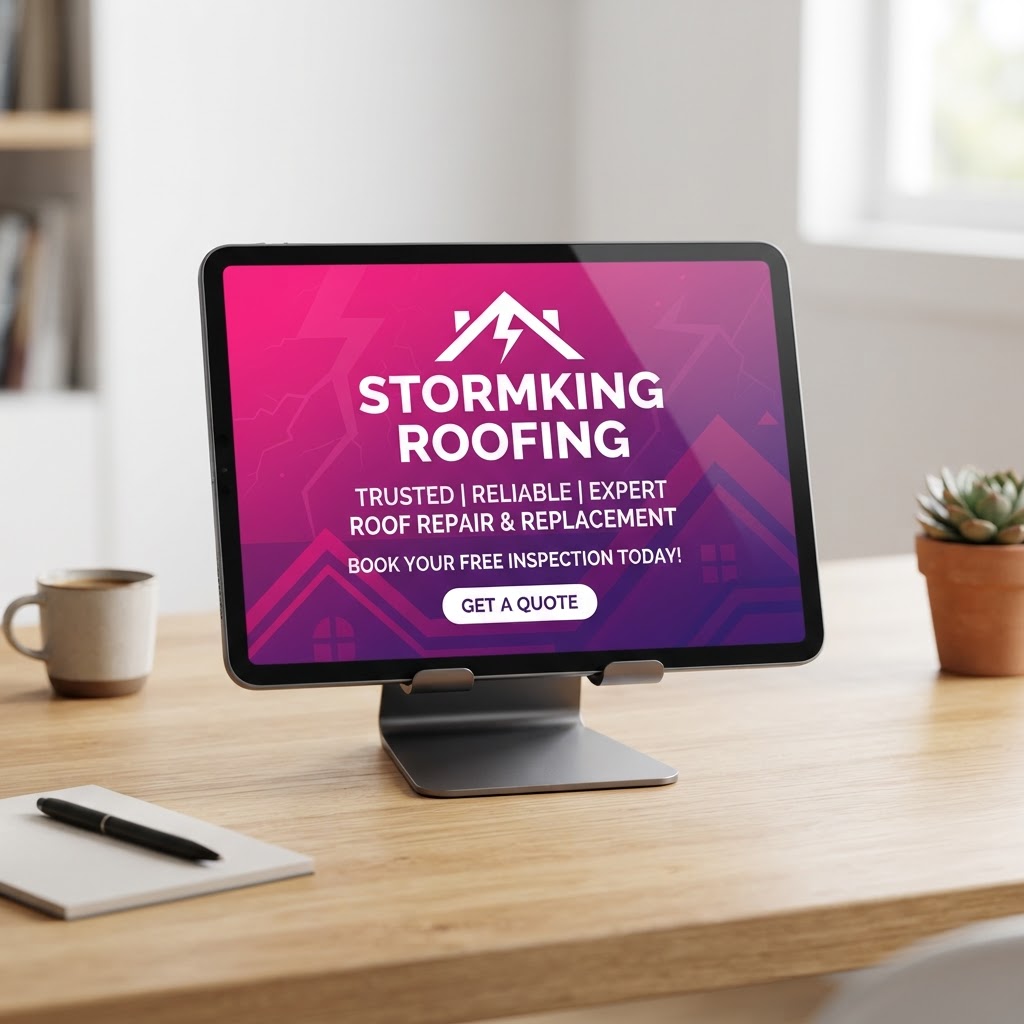
Meta ads are one of the few paid channels that genuinely work for roofing, and the reason is timing. Here's the play I'd run: wait for a storm, target the exact ZIP codes that took hail, put a free-inspection offer behind real before-and-after photos of local roofs, and send the click to a fast landing page instead of your homepage. Budget $1,000 to $4,000 a month in storm season, and turn it down between events rather than running the same ad all year.
Most trades waste money on Facebook because nobody scrolling at night is deciding who fixes the furnace right now. Roofing breaks that rule. A hailstorm hands you a map of homeowners who all need the same thing at the same moment, drone footage and before-and-after shots of a torn-up roof stop the scroll, and a financing offer catches the homeowner deciding over two weeks. That's why Meta (Facebook and Instagram) is the second paid channel I fund for a roofer, after Google Local Services Ads.
Here's the honest playbook: who to target, the creative that books inspections, lead forms versus a landing page, the budget, and the mistakes that drain the spend.
Do Facebook ads work for roofing companies?
Yes, and better than for most trades, because a storm hands you a map of homeowners who all need a roof at once and Meta puts your offer in front of exactly them within days. The homeowner isn't mid-emergency, they're the one deciding over the next two weeks who to call, and that's who Meta reaches best. Drone footage and before-and-after shots do the selling, and a monthly-payment offer ("$180 a month") turns the $15,000 sticker into a number a homeowner can picture. In storm season it scales faster than paid search.
How do you target the right homeowners after a hailstorm?
Draw the targeting around the storm: the exact ZIP codes that took hail, filtered to homeowners, on a radius you can cover. Pull the hit area off a hail map (HailTrace and Interactive Hail Maps both publish them inside a day) and build the audience from the ZIP codes that took the worst of it. Layer on the homeowner filter, and where the housing stock skews older, an age or home-value filter so you stop paying to reach renters and new builds. After the May 2017 hailstorm that hit the Denver metro, the costliest in Colorado history, the roofers who moved first drew tight ZIP audiences around the hardest-hit suburbs and had a free-inspection offer live before the chasers finished knocking. Keep the radius inside your real service area, because a lead 40 miles out is one you can't run at a margin. Shut the campaign off when a ZIP is worked out, then stand it back up on the next storm.
What roofing ad creative books inspections?
Real photos and video of local roofs: storm damage, before-and-afters, and drone footage, never stock images of somebody else's house. The homeowner scrolling past has the same damage on their own roof and recognizes it, so a close-up of hail-bruised shingles or a drone shot of a torn-up ridge stops the thumb where a stock photo gets ignored. Before-and-after pairs do the heaviest lifting, because they show the problem and the finished roof in one frame. Shoot it on the job: crew in matching shirts, a wrapped truck at the curb, a roof in a neighborhood that looks like theirs. Put the offer on the image in one line ("Free Storm Damage Inspection") so it reads with the sound off. Stock photos and clip-art houses read as the out-of-town crew, the last thing you want in a feed full of storm-chaser warnings. This is the piece I build: the roofing ad and social creative that looks like a real local company, not a template.
Should you use Facebook lead forms or send clicks to a landing page?
Send storm clicks to a fast landing page, and save Meta's built-in lead forms for the slower, top-of-funnel offers. Instant forms load inside the app and cost less per lead, but the lead is lower-intent, because filling three pre-filled fields takes no commitment and half the people forget they did it. A dedicated landing page (fast, mobile-first, one offer, a tap-to-call button and a short form) qualifies harder and books better, which matters when the ticket is $9,000 to $25,000. The trade-off in one sentence: lead forms get you more leads for less money and more of them are junk, so if you can't answer fast and follow up hard, the cheaper leads cost you more. For a storm push where speed decides the job, I run a landing page every time.
How much should a roofer spend on Facebook ads?
Plan on $1,000 to $4,000 a month in storm season, scaled to the event, and close to nothing between storms. In an active hail market, $1,000 to $2,000 a month holds a steady presence, and a fresh storm is worth pushing to $3,000 to $4,000 while the window is open, because the two to three weeks after hail is when the whole street decides. Meta leads for roofing run $10 to $40 through a lead form and $30 to $80 through a landing page, cheaper than Google's $75 to $250, which is part of why Meta earns its slot. Spend where the storm is, then pull back.
Try us free
Want it designed right, without the guesswork?
How do you know if your roofing Facebook ads are working?
Track cost per booked inspection and cost per signed job, not likes, reach, or cost per lead on its own. A campaign that reports 200 leads at $12 each looks great until you learn none of them answered the phone, so the number that counts is what a signed roof costs you in ad spend. Tag where every lead came from in AccuLynx or JobNimbus and follow it to the contract. A healthy storm campaign lands a $9,000 to $25,000 job for a few hundred in ads. If you can't tie leads to booked jobs, you're flying blind, and the agency running your account is counting on it.
What are the biggest mistakes roofers make with Facebook ads?
Running the same ad all year, boosting posts instead of building campaigns, and sending clicks to a slow homepage with no offer. Each one wastes the budget:
- Running the same ad year-round. Roofing demand spikes with storms, so a static ad in a calm month burns money on homeowners with fine roofs. Match the spend to the weather.
- Boosting a post instead of running a campaign. The Boost button hands Meta your money with no real targeting, no offer, and no lead capture, and it books nothing. Build the campaign in Ads Manager with a real objective.
- No fast landing page behind the click. A storm click sent to a slow homepage that makes the homeowner hunt for the phone number loses the lead you paid for. One offer, one page, a tap-to-call button.
- No offer. "We do roofing" is not an offer. "Free storm damage inspection this week" is. Give the scroller a reason to stop and a reason to act.
Wait for the storm, target the hit ZIP codes, put real before-and-after roofs behind a free-inspection offer, and send the click to a fast page you can answer within the hour. Match the creative to the rest of your roofing brand so the ad, the truck, and the yard sign down the block read as one established local company. A flat-rate design plan keeps the ad creative, the landing page, and the signs consistent for one monthly cost, and your first design is free, so you can see the campaign creative before you spend a dollar on Meta.
Keep reading
Roofing branding & design →