Roofing Branding 101: A Brand Homeowners Trust After a Storm
The morning after a storm, a homeowner sorts the local roofers from the out-of-town chasers before anyone knocks. Your brand is what decides which pile you land in, and looking permanent is worth a 10 to 20 percent premium.
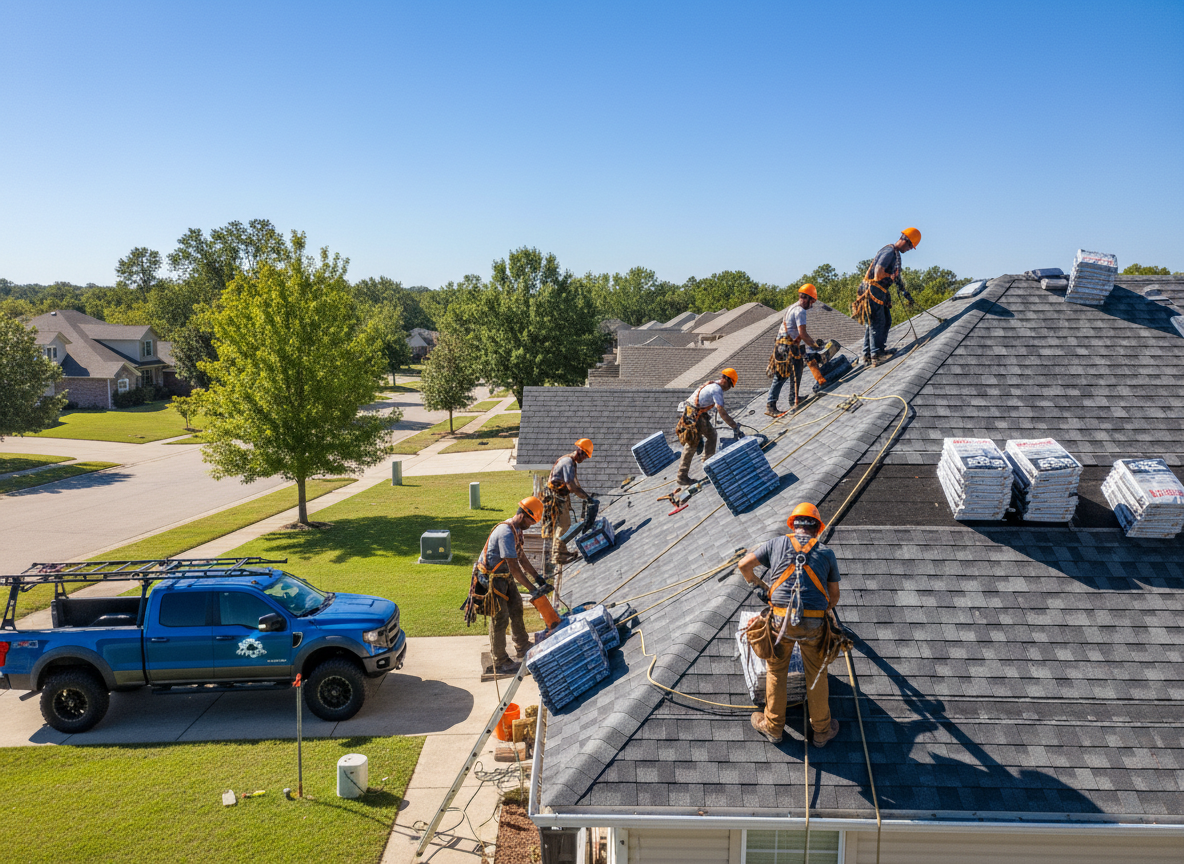
The morning after a hailstorm, a homeowner stands in the driveway looking at a street full of trucks that showed up overnight, and before anyone knocks they're doing one thing: sorting the local roofers who will still be here in five years when the warranty matters from the out-of-town crews who will be three states away by Thanksgiving. Your brand is what decides which pile you land in.
You win that sort by looking permanent and local everywhere a homeowner can see: the truck, the crew shirt, the yard sign already standing on a lawn down the block, the card with a local address and "licensed and insured" on it. The logo is one piece of that. The brand is the sum, and it's what lets an established shop hold a 10 to 20 percent premium over the chaser's bid.
I've built these systems for roofing shops for 20 years, and the pattern never breaks: the company that reads as local and permanent gets trusted first, closes the storm work the chasers are fighting over, and stops competing on price. Here's how a roofing brand does that sorting for you, and where shops leave the money on the table.
Why does a roofing brand matter more after a storm?
Because that's the exact moment a homeowner's fear of getting scammed is highest and the job is biggest. A re-roof runs $10,000 to $30,000, insurance money is on the line, and every local news station has run the "watch out for storm-chasing contractors" segment. When the stakes and the suspicion peak together, a homeowner leans hardest on the one thing they can read in seconds: whether you look like a real local company. In a slower trade the brand is a nice-to-have. In post-storm roofing it's the filter you pass or fail before you say a word.
What is a storm chaser, and why do homeowners fear one?
A storm chaser is an out-of-town crew that follows hail and wind across the map, books a season of roofs, and leaves before the warranty is worth anything. Homeowners fear them because they've heard the stories: the deposit taken and the crew that vanished, the tear-off that fails inspection, the "lifetime warranty" from a company with no local address to honor it. The tells are a rented truck with a magnet sign, out-of-state plates, a clipboard, and no reviews tied to your town. Once a homeowner has been warned about that pattern, they read every roofer through it, which is why looking like the opposite is worth real money.
What signals tell a homeowner you're the local roofer, not the chaser?
The permanent, local ones a chaser can't fake in a weekend: a wrapped or cleanly lettered truck with a local number, "licensed, bonded, and insured" where they can see it, crew shirts, yard signs already standing on nearby lawns, a real Google Business Profile full of local reviews, and a physical address in the area. Each one says "I was here before the storm and I'll be here after." A manufacturer credential helps too, because a GAF Master Elite or Owens Corning Preferred badge is tied to a vetted company with a track record, not a magnet. Stack enough of these and the homeowner stops worrying and starts talking scope and price.
Try us free
Want it designed right, without the guesswork?
Which brand pieces do the trust-sorting?
The ones a homeowner meets in person, roughly in this order:
- The truck, wrapped or lettered, local number and "licensed and insured" visible.
- The crew: matching shirts, hi-vis, a tidy look on the roof and the lawn.
- The yard signs already on finished roofs around the neighborhood.
- The estimate, on real letterhead in a branded folder, not a torn-off pad.
- The card and magnet left behind, carrying a local address.
- The logo, colors, and manufacturer badges tying all of it together.
Every one of those either reads as one established local company or reads as scattered and temporary. There is no neutral setting. A chaser can produce maybe two of them; the local roofer produces all six, and the gap is the whole pitch.
Does looking established let a roofer charge more than the chaser's bid?
Yes, and it's the only reliable way to stop losing to the low number. When you look permanent and local, the higher quote reads as the safe choice, not the expensive one, and safety is exactly what a homeowner is buying when the downside is a leak over the bedroom in two years. Established shops routinely hold that 10 to 20 percent premium over the storm-chaser bid, because the cheap bid also looks like the risky bid. Let your brand look as thrown-together as the chaser's and you hand that premium away, stuck fighting on price, which is the one fight nobody in roofing wins.
How consistent does a roofing brand have to be to read as permanent?
As close to identical as you can make it, every truck, every sign, every card, every time. Permanence reads as repetition: the same logo, the same red or navy, the same font on the truck, the folder, the shirt, and the sign. The neighbor who saw your truck on Tuesday, your yard sign on Thursday, and your crew's shirts on Saturday has seen one company three times, and three sightings is when a name sticks and "local and everywhere" becomes the impression. Drift kills it. A new truck in a slightly different red, an estimate with last year's logo, a yard sign that doesn't match, and you look assembled from parts, which is how a chaser looks.
What does it cost to build a roofing brand that beats the chasers?
Bought piece by piece: a logo runs $500 to $3,000, a truck wrap $3,000 to $6,000 or clean lettering $300 to $800, plus shirts, cards, magnets, and yard signs as you go. Sourced from five different vendors, the pieces rarely match, and you pay again to fix the mismatch. A flat-rate design plan builds the whole system to one standard for a predictable monthly cost, which for a growing shop is cheaper and steadier than piecing it together. The more useful question: what is it costing you right now to look seasonal while you bid against the roofer who looks like he's worked these streets for 20 years?
How do you build the whole system before the next storm hits?
Build it once, to one plan, in the off-season, so you're not designing a truck the week after the hail lands. The roofers who clean up on storm work already had the wrapped trucks, the stacked yard signs, and the matching folders ready before the sky opened, because you can't manufacture "established" overnight. That's the work: one coherent roofing brand, logo, colors, truck, cards, signs, and crew apparel designed to match and delivered print-ready, starting from a real logo and brand identity. Your first design is free, so you can see the system on your own trucks and signs before you spend a dollar on print. Get it built now, and when the storm comes you're already in the local pile.
Keep reading
Roofing branding & design →