Plumbing Marketing: How to Spend to Book More Jobs
A water heater dies on a holiday and the homeowner calls whoever ranks first and answers live. Here's the plumbing marketing plan I'd run to be that shop, what it costs, and what to skip.
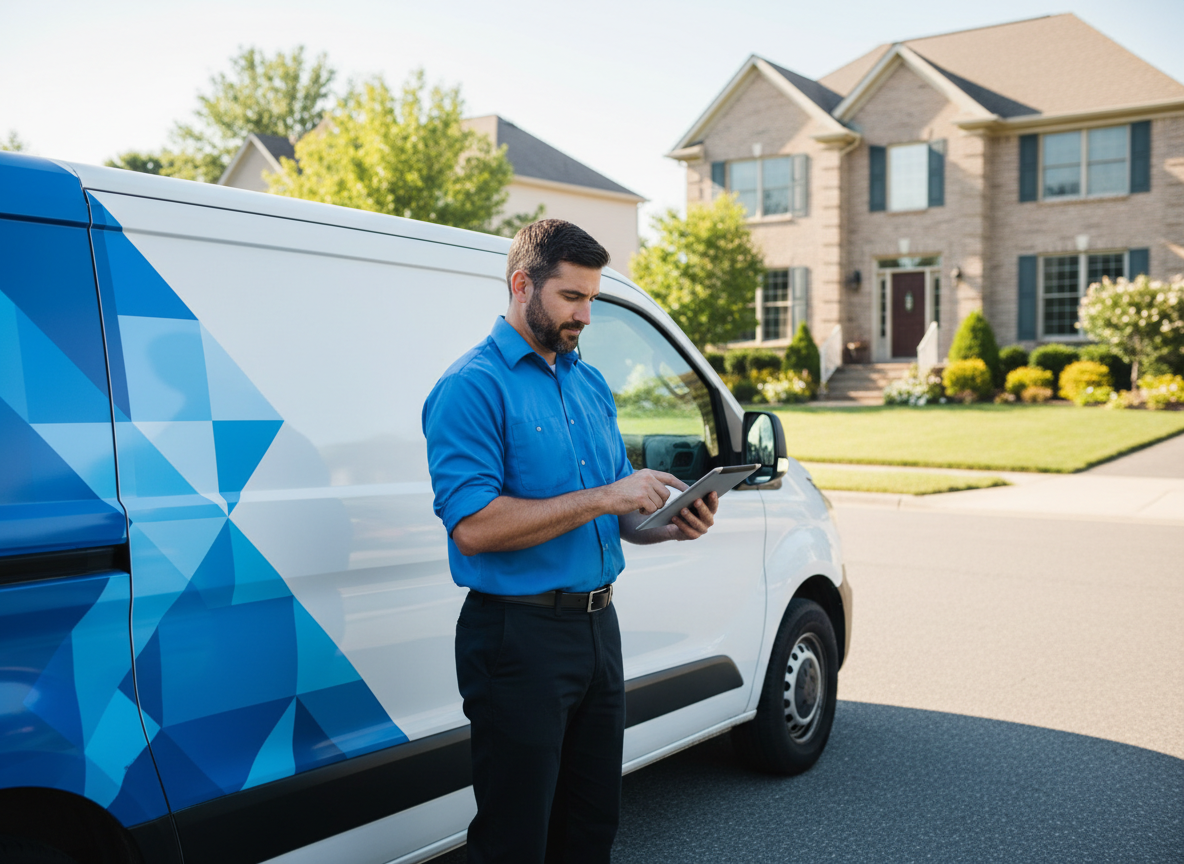
Here's the plumbing marketing plan I'd run before spending a dollar anywhere else: get Google Local Services Ads live, claim and fill your Google Business Profile, work a review on every job, and put a live person on the phone 24/7. That combination catches the homeowner typing "plumber near me" at 6am and turns the search into a booked call. Once it's humming, layer Google Ads on top for the planned work (water heaters, repipes, remodel rough-ins). Do those in that order and you'll book more than the shop spending twice as much on billboards and van magnets.
Plumbing splits into two kinds of work, and each gets marketed differently. Emergency work (a burst line, a backed-up main, a dead water heater on a holiday) goes to whoever ranks first and answers fastest, which is why "plumber near me" is one of the highest-intent searches in all of local business. Planned work (a repipe, a tankless upgrade, a bathroom rough-in) gets shopped over a few days, so it rewards a fast website, strong reviews, and a paid-search ad that shows up for the exact job. One plan has to feed both.
On money: a one-to-three-truck shop should plan on $3,000 to $8,000 a month across channels, weighted toward Local Services Ads and Google. That's roughly 5 to 8 percent of revenue, where healthy trade shops land. Spend under that and you get outbid on the emergency searches that pay the bills.
How do I market my plumbing business?
Own the emergency search and the phone first, then buy the planned work with paid search. The foundation is four things working together: Google Local Services Ads to sit above the map, a fully built Google Business Profile to win the map pack, a review on every job to keep you there, and a real human answering 24/7 so the lead becomes a booking. Add Google Ads for the higher-ticket planned jobs, and use plumbing social ads to stay known between emergencies and to run your hiring, because in this trade recruiting techs is half the fight. The trade-off: this front-loads work on profiles and phones instead of one big splashy campaign, and it's the split that books the most jobs per dollar I've seen.
Are Google Local Services Ads worth it for plumbers?
Yes, they're the single best lever in plumbing marketing, because you pay per lead instead of per click and sit above the map with a Google Guaranteed badge. When a homeowner searches an emergency, the badged slot at the top is the one that gets tapped, ahead of the map and the regular ads. Leads run $25 to $75 each depending on your market and the job, and a single-location shop should budget $1,500 to $5,000 a month. You dispute junk leads (wrong number, spam, out of area) and Google credits them back. The catch: you have to pass the license and background screening to earn the badge, and you have to answer fast, because Google ranks Local Services advertisers partly on how you respond. Slow phone, wasted spend.
Why does answering the phone live 24/7 win plumbing jobs?
Because a plumbing emergency call that hits voicemail is a job you handed to the next shop on the list. A homeowner with water spreading across the floor calls two or three names and books the first live human who can come now. Every lead you paid for through Local Services Ads or Google Ads dies at that voicemail beep. If you can't staff nights yourself, a live answering service that books or dispatches runs $150 to $500 a month and beats a recording every time. The trade-off is real: 24/7 coverage costs money and sleep, but it's the difference between paying for leads and cashing them.
How do plumbers get more Google reviews?
Ask on every single job, the same day, with a text that links straight to your Google review page. Recency is the part shops miss: a steady drip of new reviews signals to Google and to homeowners that you're busy and current, and it outranks a shop with more lifetime reviews that stopped collecting in 2022. Aim to hold a 4.7 or higher star rating and add several new reviews a month. ServiceTitan and Jobber both automate the review-request text so it goes out when the tech closes the ticket. Respond to all of them, the angry ones included. Never buy reviews. Google filters the fakes and can suspend the profile, and homeowners read the one-stars first anyway.
Which plumbing jobs should your marketing chase?
Water heaters, repipes, and sewer and drain work, because that's where the ticket and the margin live. A water heater swap runs $1,500 to $3,500 installed, tankless $3,000 to $6,000. A repipe runs $4,000 to $15,000. A sewer line replacement runs $3,000 to $25,000. Drain cleaning is a smaller ticket, but it fills the schedule and opens the door to the camera inspection that finds the sewer job. Build a dedicated landing page and a Google Ads campaign for each money job instead of one generic "plumbing services" page. The trade-off: drain cleaning barely pays on its own, so treat it as the lead-in to the big-ticket work, not the profit center.
Should a plumber run Google Ads too?
Yes, but for planned work, and only after Local Services Ads and reviews are already producing. Google Ads is where you catch the homeowner typing "water heater replacement" or "whole house repipe cost" who is shopping over a few days rather than panicking. Clicks in plumbing run $8 to $30, among the priciest in the trades, so point each ad at a matching landing page with a price range, photos, and a tap-to-call button, not your homepage. The trade-off: at those click prices a slow site or a weak offer bleeds money fast, so the ad is only as good as the page behind it.
How should a plumber split the marketing budget?
Put the biggest slice on Local Services Ads and the phone, then Google Ads for the planned work, then a smaller piece on brand and social. For a shop spending $3,000 to $8,000 a month, I'd run it close to this:
- 45 percent on Google Local Services Ads, the pay-per-lead channel that catches the emergency search.
- 25 percent on Google Ads for the planned money jobs (water heaters, repipes, tankless upgrades).
- 20 percent on the profile, reviews, and a fast site, the free-to-cheap work that makes the paid channels convert.
- 10 percent on social ads and brand to stay known and carry your hiring.
The trade-off: this books fewer cold clicks this month than pouring it all into paid search, and it builds the reputation and repeat base that keep the schedule full when the ad budget is tight.
Try us free
Want it designed right, without the guesswork?
Do plumbing membership plans pay off?
Yes, they turn one-time emergency customers into repeat revenue and a bank of reviews you can count on. A service plan at $150 to $300 a year buys the homeowner an annual inspection, priority scheduling, and a discount on repairs, and it buys you a recurring base that smooths the slow months and a reason to be back in the house before the next emergency. Members call you first because they're already paying you. The trade-off: plans take admin to run and honor, so set them up in ServiceTitan or Jobber to track renewals instead of a spreadsheet you'll forget.
What plumbing marketing should you skip?
Van magnets, billboards, and shared lead brokers, at least until the fundamentals are paying. Magnets peel off and read cheap next to a clean wrap or lettering. Billboards can't be tracked to a booked job and don't catch anyone at the moment they need a plumber. Shared lead brokers are the worst of the three: they sell the same emergency to four shops at once, so you pay to lose a race to the phone. Put that money into Local Services Ads, the profile, reviews, and a fast site, and add brand pieces like a wrapped van once the lead channels are full.
Get Local Services Ads live, the profile built, reviews coming in on every job, and a real person answering, and you'll be first for the emergency and set up to win the planned work too. Keep the van, the site, and the ads reading as one company by building them to a single plumbing brand and marketing system. A flat-rate design plan keeps every piece consistent for one monthly cost, and your first design is free, so you can see it before you spend on print or paid media.
Keep reading
Plumbing branding & design →