Multi-Location Marketing: Keep Every Branch On-Brand
Standardize the brand once, localize the spend. Every branch gets its own Google profile and local ads, but one brand system across every truck, sign, and city. Here's how to run it.
Key facts
- Standardize the brand once from the top; run Google, reviews, and ad spend separately per branch.
- Budget $1,500 to $4,000 a month per location in Local Services Ads and local marketing.
- Each location needs its own Google Business Profile; a branch with 150 local reviews outranks a single corporate profile.
- Co-op funds from suppliers often reimburse up to 50 percent of co-branded marketing.
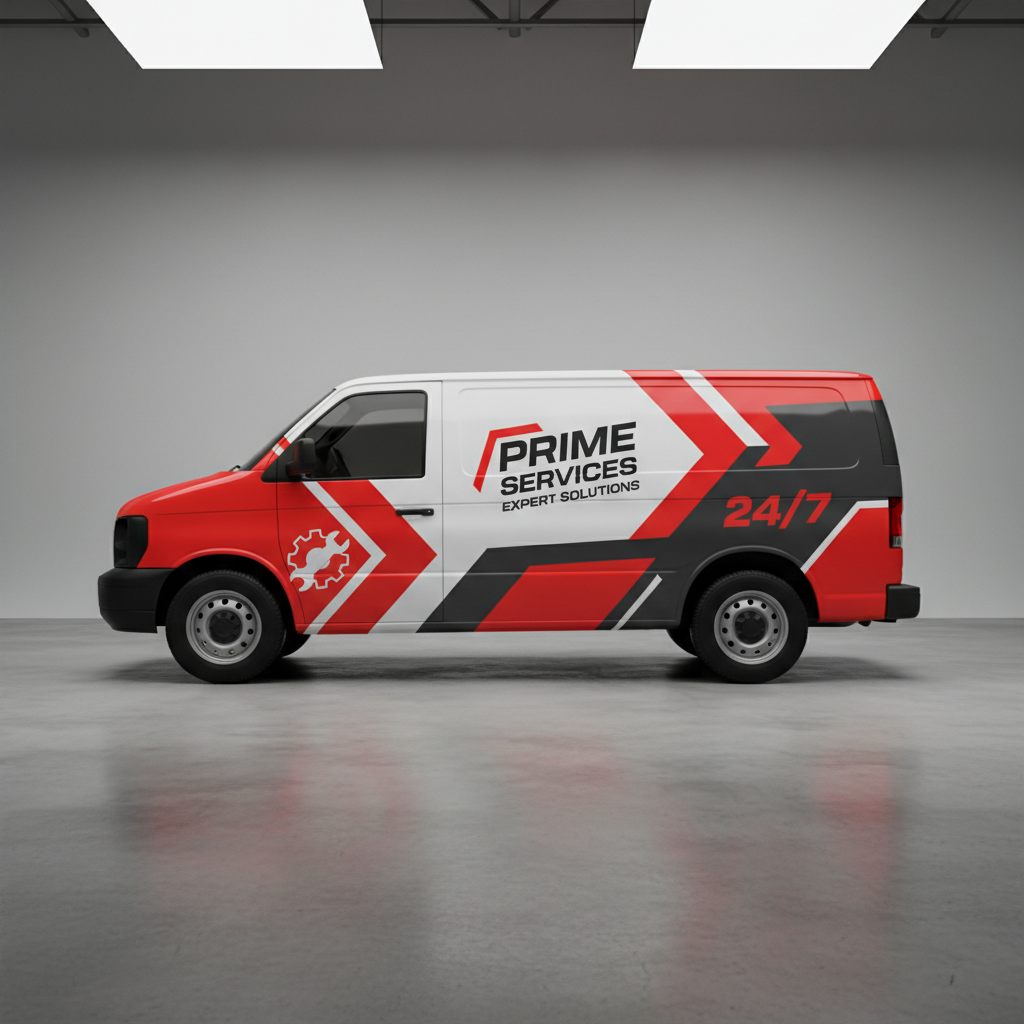
Standardize the brand once, localize the spend. That's the whole playbook for multi-location trade marketing. One brand system across every truck, sign, and city, and a separate local effort for each branch, because Google ranks on proximity and a customer in one town won't call an office two towns over.
The operators who scale cleanly treat the brand as fixed and the spend as local. The ones who struggle let each location freelance, and 18 months later they're running three logos and four shades of blue.
How do you market a multi-location trade business?
Build the brand once at the top, then run local marketing per branch. The brand, your logo, colors, wrap layout, and sign design, is identical everywhere. The demand work, your Google Business Profile, reviews, and ad spend, is separate for each location.
That split answers almost every multi-location question. Anything tied to identity gets standardized so the company reads as one brand. Anything tied to a local phone ringing gets run locally, because a homeowner searches for the trade near them, not the trade near your headquarters.
Try us free
Want it designed right, without the guesswork?
How do you keep branding consistent across locations?
Design the brand system one time, write it into brand guidelines, and make every location order from the same source. Consistency breaks when each branch manager gets to tweak the logo or grabs a color that's close enough.
Brand guidelines are the fix: the exact logo files, the color codes, the fonts, and templates for the pieces each location reprints often, cards, yard signs, door hangers. When a new branch needs 500 cards, they order the approved template with a new address, not a fresh design from whoever had a free afternoon. One source, one look, every city.
Does each location need its own Google Business Profile?
Yes, one profile per physical location, each with its own address, phone, and reviews. Google ranks local results on proximity, so you can't rank one profile in two cities, and you don't want to.
Each branch builds its own review count and its own local photos. A location with 150 reviews in its own town outranks and out-trusts a single corporate profile trying to cover three metros. Keep the name, categories, and branding identical across all of them so they read as one company with local roots in each market.
How should you split the marketing budget across branches?
Fund the brand once from the top, then give each location its own local ad budget. The shared cost is the brand build and the templates. The per-location cost is ad spend, local print drops, and the Google presence.
A rough shape for a three-location operator: one brand system built and maintained centrally, plus $1,500 to $4,000 a month per location in Local Services Ads and local marketing. A new location that's building awareness runs at the high end for the first year, then settles as its reviews and repeat work grow. Budget by location so you can see which market carries itself and which needs a push.
Who should control the brand, corporate or the branch?
Corporate owns the brand, the branch owns the local relationships. The look is not up for negotiation, the community work is. That line keeps you consistent without making the branches feel like puppets.
Give each location room to run local sponsorships, respond to their own reviews, and post their own job photos, all inside the brand template. Take away their ability to redraw the logo, invent a color, or print off-brand cards. Local flavor lives in the content and the relationships, not in the logo.
What breaks when you let each branch do its own marketing?
You end up paying to advertise what looks like three different companies. It's the most common and most expensive multi-location mistake, and it happens one small tweak at a time.
One branch prints cards a little darker. Another runs boosted posts with a stretched logo. A third orders yard signs in a font nobody else uses. None of it looks broken on its own, but a customer who moves across town, or sees two of your trucks on one street, stops reading it as one trusted brand. You've spent the money and lost the compounding.
Can you get suppliers to help pay for it?
Often, yes, through co-op marketing dollars most contractors never claim. Manufacturers and distributors frequently reimburse up to 50% of co-branded marketing, and multi-location operators leave real money on the table because the paperwork is a hassle.
If you carry a brand's equipment, ask your rep what co-op funds you qualify for and what they cover: wraps, signage, print, and ads that feature their logo alongside yours. On a multi-location ad budget, a 50% match on the co-branded pieces adds up fast. The form is annoying once, the reimbursement is real every quarter.
How do you roll the brand out to a new location?
Open with the full brand in place on day one, not bolted on later. A new branch should launch with wrapped trucks, matching yard signs, on-brand cards, a claimed Google Business Profile, and local ads live, all pulled from the same brand system as every other location.
Work the checklist before the doors open: order the fleet wraps from the master template, set up the Google Business Profile and start collecting reviews, print the local cards and signs from the approved files, and turn on Local Services Ads for the new service area. A location that opens looking like the established brand borrows that trust from day one. If you want the brand system and the templates built so every new location is a copy-paste, that's the job, and your first design is free.
Frequently asked questions
- How do you market a multi-location trade business?
- Standardize the brand once and localize the spend. One logo, color set, and wrap layout across every city, and a separate Google Business Profile, review effort, and ad budget for each branch, because Google ranks on proximity.
- Does each location need its own Google Business Profile?
- Yes, one profile per physical location with its own address, phone, and reviews. You can't rank one profile in two cities, and a branch with 150 reviews in its own town outranks a corporate profile stretched across three metros.
- How much should each location spend on marketing?
- Fund the brand once centrally, then give each branch $1,500 to $4,000 a month in Local Services Ads and local marketing. A new location runs at the high end for its first year, then settles as its reviews and repeat work grow.
- Can suppliers help pay for multi-location marketing?
- Often yes, through co-op dollars most contractors never claim. Manufacturers and distributors frequently reimburse up to 50 percent of co-branded wraps, signage, print, and ads that feature their logo alongside yours.
Keep reading
Contractor branding & design →