Moving Truck Lettering and Wraps: What Works
On a big white box truck, clean lettering usually wins on cost per impression and a full wrap is for premium positioning. Here is what works, what to skip, the spec checklist, and what it costs.
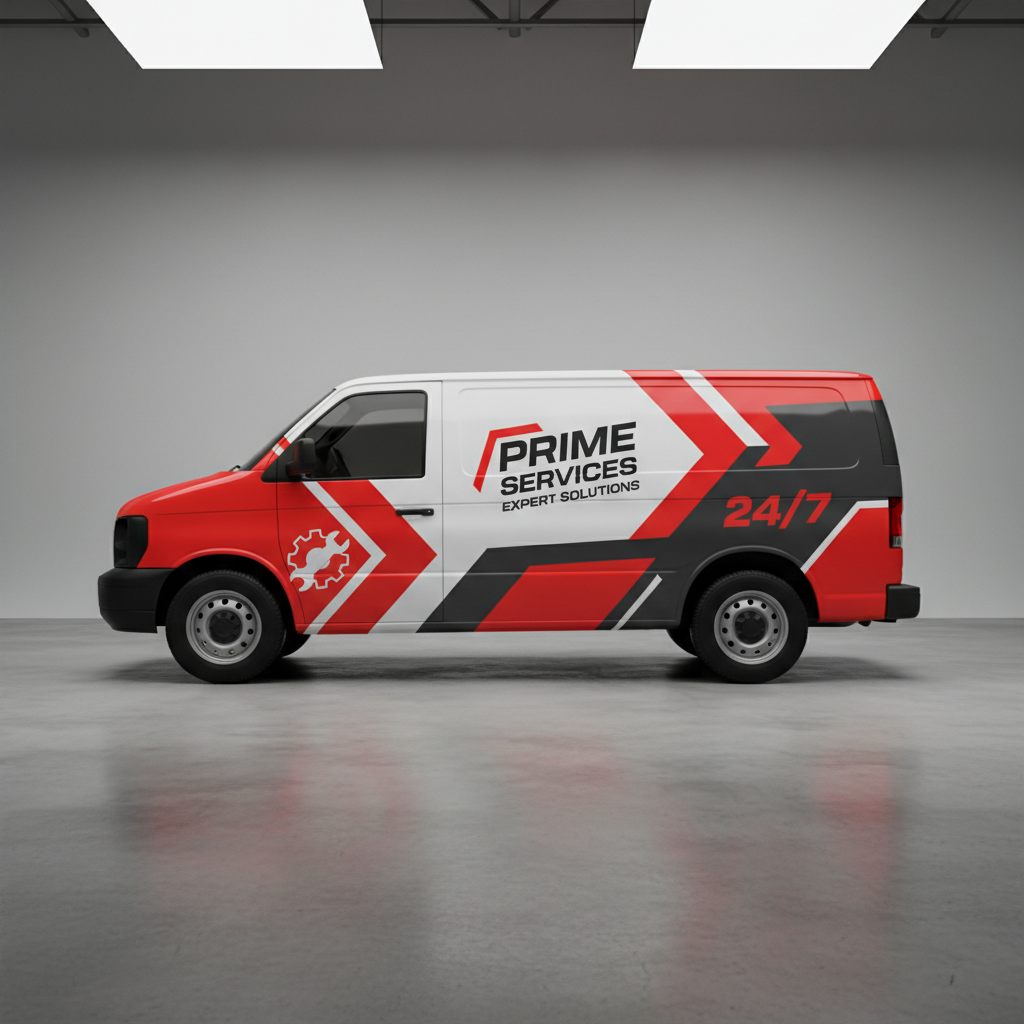
Key facts
- Cut vinyl lettering on a 26-foot box truck: $400 to $1,500, and it lasts the life of the truck.
- A full wrap on a 26-foot box truck: $4,000 to $10,000 designed, printed, and installed.
- The phone number should read from 40-plus feet, which means letters 6 inches or taller.
- A moving truck parks at a job for 4 to 6 hours, in front of the neighbors most likely to move next.
For a moving company's box truck, clean cut-vinyl lettering on the factory-white box usually wins on cost per impression, and a full wrap is for premium positioning. A 26-foot moving truck is already white and enormous, which means sharp black-and-one-color lettering with a giant phone number reads from across the street for $400 to $1,500 and lasts the life of the truck. A full wrap turns that same box into a designed billboard for $4,000 to $10,000, worth it if you are chasing the high-ticket, full-service customer. The trade-off in one sentence: lettering advertises a notch less and looks a step less established, and the savings put another truck on the road sooner.
Here is what works on a moving truck, what to skip, and the short list of what has to be on the box no matter which you pick.
Should a moving company letter or wrap its box truck?
Letter the box for most movers, wrap it when you are selling premium. A moving truck starts with two advantages a contractor van does not have: it is already white, and its slab sides are the biggest flat billboard in the trades. That means cut-vinyl lettering (your name, a huge phone number, a short URL, your license number, one benefit line) does 80 percent of what a wrap does for a quarter of the price, and it never looks cheap on a clean white box. A full wrap earns its cost when you are positioning above the bargain movers and want a designed truck that signals scale and care to a full-service buyer. For a growing local mover, letter the fleet now and wrap the one or two trucks that sit at high-visibility jobs as the budget allows.
What works on a moving truck, and what should you skip?
What works: a phone number big enough to read from across the street, a short URL, one benefit line, your license number, and a lot of white space. What to skip: a wall of services, clip-art boxes and dollies, and anything that shrinks the phone number. The number is the whole point, because a neighbor watching the move wants to save it, not read your mission statement. A clean box with a six-inch-tall number and three words of benefit beats a busy wrap crammed with nine services in five fonts, every time. White space is not wasted space on a moving truck, it is what makes the number readable from a moving car.
What must be on a moving box truck?
Five things, in order of importance, sized to read from 40-plus feet. Everything else is optional.
- A phone number, huge. The single most important element, letters six inches or taller, readable from across a residential street.
- A short, memorable URL. yourname.com, not a long string with dashes and a directory path.
- One benefit line. Local and long-distance, free quotes, or licensed and insured: pick one, not all three.
- Your license number. Your USDOT and MC number (or state moving license) is required on the truck, and it signals a legitimate, legal operator to a nervous customer.
- A clean logo and one or two brand colors. Enough to look like a real company, not so much it crowds the number.
If it does not fit on that list, it does not belong on the box. The test: stand 40 feet back and read it in two seconds, or cut something.
Try us free
Want it designed right, without the guesswork?
How much does moving truck lettering or a wrap cost?
$400 to $1,500 for clean cut-vinyl lettering on a 26-foot box truck, and $4,000 to $10,000 for a full wrap designed, printed, and installed. Lettering covers the name, number, URL, license, and logo in cut vinyl straight on the white box, and it lasts the life of the truck. A full wrap prints edge to edge, so the whole box becomes your design, and it runs higher on a 26-footer because a box truck is a lot of square footage. A partial wrap (doors plus a printed band or the rear) splits the difference at $1,500 to $4,000. Ask what film the shop prints on: you want a cast vinyl like 3M IJ180 or Avery 1105 with a matching laminate, because cheap calendered vinyl with no laminate fades and lifts inside two years, a three-year wrap at a five-year price. Design is a few hundred dollars a project or included on a moving truck wrap and lettering design plan.
Why is a parked moving truck the best billboard you own?
Because it sits on a residential street for four to six hours at every job, in front of the exact neighbors most likely to move next, and you already own it. A billboard you rent reaches strangers on a highway for a flat monthly fee. Your moving truck parks at a real move, on a real street, where every neighbor walking a dog or pulling into a driveway sees a company that is clearly busy on their block, and moving is contagious: one family goes and others start thinking about it. Design for that neighbor, the one watching boxes come off the truck, not for a designer's portfolio. That is why the number has to be huge and the message has to read in two seconds. Build the lettering or the wrap to your specific box (door seams, roll-up back, body lines) and match it to the rest of your moving company brand so the truck, the cards, and the crew shirts read as one company, starting from a real logo and brand system. Your first design is free, so you can see the layout on your own make and model before you pay for print and install.
Keep reading
Moving branding & design →