How to Market a Landscaping Business (and Fill the Route)
You run two businesses under one word: a recurring route and a design-build shop. Own the streets you already mow with signs and door hangers, feed Google reviews, and save paid ads for the high-ticket installs. Here's the ranking and the budget.
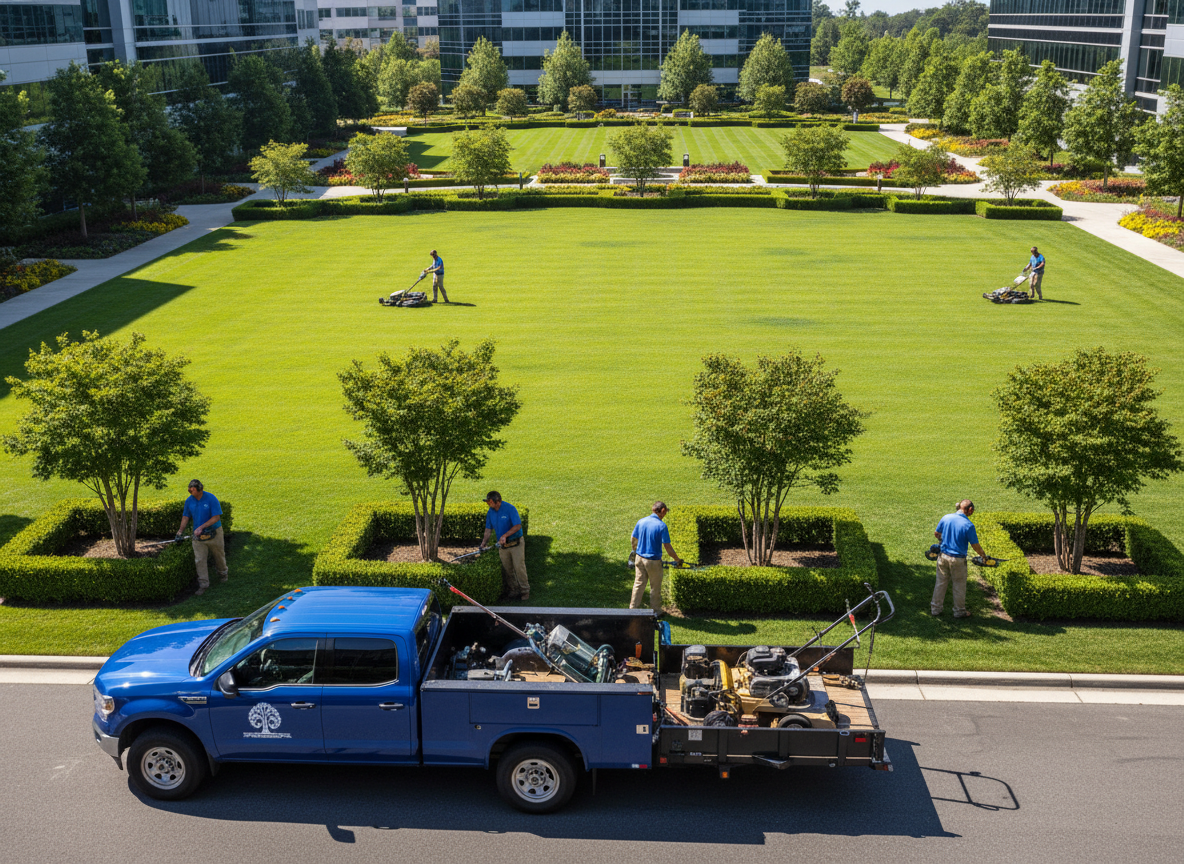
Two landscaping companies can wear the same word on the truck and run different businesses, and they do not market the same way. Here's my default for most crews: own the neighborhoods you already work with yard signs and door hangers, lock down your Google Business Profile and work reviews on every job, and save paid ads for the design-build and hardscape leads. Maintenance grows on density and reputation. Install work grows on a portfolio and paid reach.
That split is the whole trick. One crew mows 40 lawns on a tight route and lives on recurring accounts. The other builds $14,000 patios and lives on a portfolio. Run one playbook for both and you overspend chasing clicks for work that comes from the street you are already on, while starving the install side that needs the ad budget.
Here's how I rank the channels, what each costs, and where landscapers light money on fire.
What's the best way to market a landscaping business?
Dominate the neighborhoods you already service with signs and door hangers, claim and fill your Google Business Profile, earn a review on every job, and save paid ads for the design-build work, in that order. Route-based maintenance is a proximity game, so the money goes where proximity pays: the street you are already on. Google Business Profile and reviews catch the homeowner who searches "lawn service near me" and the one comparing you to the crew across town. Paid search and Meta come last for maintenance and first for install, because a $14,000 patio justifies a $40 lead and a weekly mow does not. The bad move is the reverse, a mowing company dumping its budget into a wide Google Ads blast across a 30-mile radius, paying for clicks from homeowners who will never sit on the route. Rank it the way I laid it out and you spend where the work comes from, not where an agency wants to send your money.
Why is marketing a lawn care route different from marketing design-build work?
Because they are two businesses: recurring maintenance sells proximity and reliability to a whole street, while design-build sells a portfolio to a wider radius at a much higher ticket. A weekly mowing account is worth $150 to $300 a month and lives or dies on route density, so you want ten lawns on one street, not ten scattered across the county. A hardscape or design job runs $5,000 to $40,000, and a homeowner will drive past three closer companies to hire the one whose paver patios look right in the photos. So maintenance marketing is about being the obvious local choice on a block, and install marketing is about proof and reach. One brand can carry both, but the spend behind each pulls in a different direction, and the sections below split them so you stop funding one out of the other's budget.
What's the cheapest way to get more lawn care accounts?
Neighborhood density: sell the whole street you already mow before you spend a dollar reaching strangers across town. Every lawn you service is a standing ad to the neighbors who mow their own and resent it, so stake a branded yard sign on the accounts that look sharp, and drop a door hanger on the 15 to 30 houses around each lawn you already keep. The math is hard to beat: a 4mm coroplast yard sign runs $8 to $15 with an H-stake, and door hangers print at $0.15 to $0.40 each, so canvassing a whole street costs less than a week of Google Ads. Better, the new account sits on a route you are already driving, so the second lawn on a street is close to pure margin on the drive time you already eat. A crew that picked up a subdivision around Frisco, Texas, in 2024 grows that account faster by working the surrounding streets than by buying clicks that scatter it across the metro on time it can't bill.
How do landscapers get found on Google?
Claim and fully fill your Google Business Profile, then earn a review on every job, because the map pack (the three local results above the blue links) is where "landscaping near me" lands. This is the highest-return free thing you own: the profile, the service area, real photos of your crew and finished work, and a steady drip of reviews. For the design-build side, Google Local Services Ads sit above the map with a Google Guaranteed badge and charge per lead instead of per click, which runs $1,000 to $3,000 a month in most markets and pays off when one won job is worth five figures. Skip the outfits that cold-call to sell you $200-a-month "GBP optimization," because the profile is work an owner does in an hour, not a subscription. Reviews are the tiebreaker in the map pack, so ask for one the day you finish, and let Jobber or Yardbook send the request automatically, so it happens on every job instead of the ones you remember.
Do Facebook ads work for landscaping?
Yes for design-build and seasonal offers, and weaker than a door hanger for chasing weekly mowing accounts. Meta (Facebook and Instagram) lets you draw a radius around the neighborhoods you want and put a before-and-after patio photo in front of the homeowners inside it, which is strong for a $9,000 hardscape because the image sells and the buyer is scrolling at home. For $300 to $1,000 a month you can own the feed in a handful of ZIP codes. Boosting a random post for $20 is not that; it hands Meta your money with no targeting and no offer, and it books nothing. Where paid social falls short is recurring maintenance, because nobody scrolling Instagram is deciding who mows on Tuesday, and a neighborhood ad campaign will not out-book a physical door hanger on that block. Use Meta to sell projects and fill the spring and fall calendars, not to grind out $200-a-month accounts.
Try us free
Want it designed right, without the guesswork?
How do you market a landscaping business through the seasons?
Book the spring before it starts, then sell your own customer list in the fall. Landscaping revenue is front-loaded: the phone explodes in March and April when lawns green up, so the companies that win spring did their marketing in January and February, when a door-hanger drop and a "reserve your spot" offer lock accounts ahead of the rush. Fall is the second season most crews underplay, because leaf cleanup, aeration, and gutter work are easy add-ons sold to accounts you already service, at close to zero acquisition cost. Winter, in a cold market, is when you build the yard signs, the site, and the photo library you never have time for in July. A market like Columbus, Ohio, gives you eight billable months, so treat the marketing calendar as seasonal as the work, and never let the spring rush be the first time you think about lead gen.
How much should a landscaping company spend on marketing?
Plan on 3 to 5 percent of revenue for a maintenance-heavy company and 5 to 10 percent for a design-build one, because the two buy growth in opposite ways. A mowing operation spends light: yard signs, door hangers, a maintained Google Business Profile, and review automation through Jobber add up to a few hundred dollars a month, so a $400,000 route company runs $1,000 to $1,700 a month and puts most of it into print and neighborhood canvassing. The install and hardscape side spends more because it buys leads: Google Local Services Ads, Google Ads on terms like "paver patio installer" with clicks at $5 to $15, and Meta project campaigns push a busy design-build company to $2,500 to $6,000 a month. The trade-off is plain. Spend maintenance money like an install company and you overpay for clicks that never become recurring routes; spend install money like a maintenance company and you never feed the pipeline a $20,000 job needs.
Get the yard signs and door hangers working the streets you already own, keep the Google Business Profile and reviews fed, and point paid dollars at the design-build work that can carry them. Keep every piece, the sign, the hanger, the truck, the ad, matched as one landscaping brand so the homeowner who sees your sign this week recognizes your door hanger next week. A flat-rate design plan keeps all of it consistent for one monthly cost, and your first design is free, so you can see it before you spend on print or ads.
Keep reading
Landscaping branding & design →