How Much Should a Contractor Spend on Marketing?
Spend 5% to 10% of revenue on marketing, weighted to the high end when you're growing. Here's where it goes, what to fund first, and how a multi-location budget differs from a single shop.
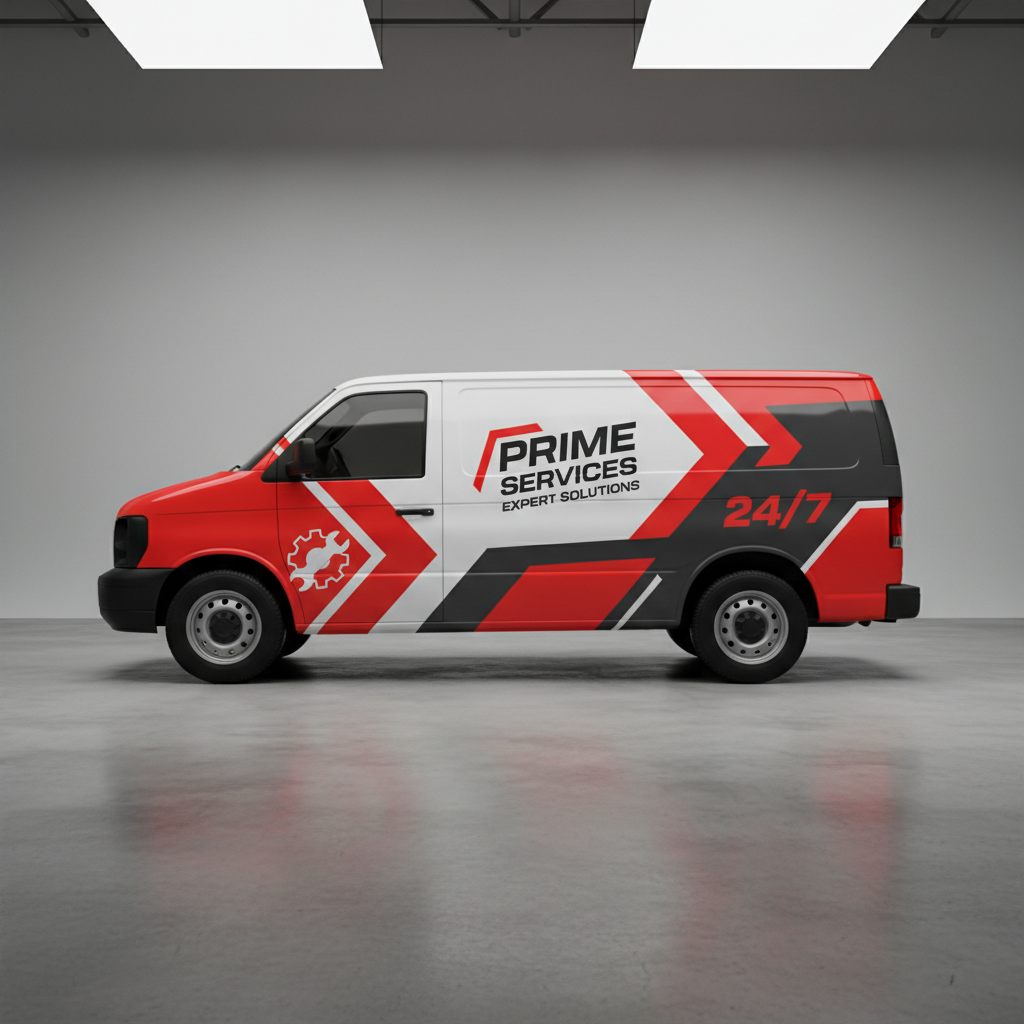
Key facts
- Marketing budget: 5 to 10 percent of revenue, or 8 to 12 percent when you're pushing to grow.
- On $1M in revenue, that's $50,000 to $100,000 a year, about $4,000 to $8,000 a month.
- The one-time foundation (logo, one wrap, signs, cards, site) runs $6,000 to $15,000 in the first 60 to 90 days.
- Once the foundation is built, put 50 to 70 percent of the monthly spend into ads and lead generation.
- Suppliers often reimburse up to 50 percent of co-branded marketing through co-op funds.
Spend 5% to 10% of your revenue on marketing. If you're established and holding steady, 5% keeps the phone ringing. If you're pushing to grow or you opened a second location this year, plan for 8% to 12% until you hit the size you want.
On $1M in revenue, that's $50,000 to $100,000 a year, or roughly $4,000 to $8,000 a month across everything: your wraps and signs, your website, your Google presence, and your ad spend. That number scares people, so they spend $200 on a Facebook boost, get nothing, and decide marketing doesn't work. It works. Underfunding it doesn't.
Here's how to size the budget and where to put it, one truck or twelve.
How much should a contractor spend on marketing?
Between 5% and 10% of gross revenue, weighted by how hard you're pushing to grow. The benchmark most often cited for a business under $5M that wants to grow is 7% to 8% of revenue, and it holds up well for the trades.
Use 5% if you're booked out and defending your position. Use 8% to 12% if you're chasing growth, entering a new service area, or opening a location, because you're buying awareness you don't have yet. A brand-new shop with no reputation runs higher for the first 12 to 18 months, then settles once repeat and referral work carries more of the load.
One rule matters more than the percentage: spend it on things that compound. A wrap works for five years. A Google review sits there for years. A one-day radio buy is gone by dinner.
Try us free
Want it designed right, without the guesswork?
What does a contractor marketing budget buy?
Two things, and mixing them up is where the money leaks: one-time brand assets and ongoing demand.
Brand assets are what you build once and use for years: your logo and brand, truck wraps, yard signs, business cards, and your website. This is the foundation. A contractor logo and brand system that stays consistent across every truck and sign is what makes a two-truck shop read as a real company, and it makes every dollar you spend after it work harder.
Ongoing demand is what you feed every month to keep leads coming: Google Ads or Local Services Ads, Facebook and Instagram ads, your Google Business Profile, and the posts that keep you visible. This is the tap. Turn it off and the leads stop in about 30 days.
New operators get this backward. They pour everything into ads before they have a brand, so the clicks land on a $12 logo and a white van, and nobody calls. Build the foundation, then open the tap.
How much is one-time versus monthly?
Front-load the foundation, then hold a steady monthly number. A realistic first-year split for a growing shop:
- Foundation (one-time, first 60 to 90 days): logo and brand, one wrapped van, a set of yard signs, business cards, and a website. Budget $6,000 to $15,000 depending on how many vehicles you wrap. The wrap is the big line, $3,000 to $6,000 per van installed.
- Monthly (every month after): ad spend, your Google presence, seasonal print drops, and new creative. Budget $2,000 to $6,000 a month for a $1M shop, most of it ad spend.
The foundation is the part contractors skip to save money, and it's the part that makes the monthly spend convert. Skipping it is like buying leads and sending them to a business that looks like it won't be here next month.
What should a single-location shop spend on first?
In this order: your Google Business Profile, one real logo, one wrapped truck, then ads. That order is deliberate.
Your Google Business Profile is free, and it's the highest-return hour you'll spend this month. Fill out every field, pick the right primary category, add real photos, and ask every happy customer for a review. For a local trade, the map pack drives more calls than anything you can buy.
Then a real logo and a wrap, because they turn work you already do into advertising. A wrapped van in a driveway is seen by the whole street for six hours, and it costs nothing per impression after the install.
Ads come last, once the foundation can convert the clicks. A single-location shop can do real damage on $1,500 to $3,000 a month in Google Local Services Ads, where you pay per lead and show up above the map.
How is a multi-location marketing budget different?
Budget per location, standardize the brand once, and localize the spend. Each location needs its own Google Business Profile, its own reviews, and its own local ad spend, because Google ranks on proximity and you can't rank one office in two cities.
What you do not duplicate is the brand. Design the brand system one time, lock it into brand guidelines, and roll it out to every truck, sign, and location the same way. The mistake multi-location operators make is letting each branch print its own cards and run its own boosted posts, and 18 months later you have three logos, four shades of blue, and a brand that means nothing.
If you sell through distributors or run branches, ask about co-op dollars. Manufacturers and suppliers often reimburse up to 50% of co-branded marketing, and most contractors leave that money sitting there because the paperwork is a hassle.
Rough math: a three-location operator at $3M runs $180,000 to $300,000 a year total. The smart version is one shared brand build plus three local ad budgets, not three agencies reinventing the logo.
How much should go to ads versus everything else?
Once the foundation is built, put 50% to 70% of the monthly number into ad spend and lead generation, and keep the rest for creative, print, and brand. Ad spend is the part that turns into leads this week. Creative and print are what make those ads and that reputation land.
Split the ad money by what your market rewards. For most home-service trades, Google Local Services Ads and Google Search earn the first dollars, because the person searching "AC repair near me" is ready to buy. Facebook and Instagram ads come next for awareness, seasonal pushes, and hiring. Put the smallest slice into anything you can't measure.
Where do contractors waste the most marketing money?
On things that don't compound and things they can't measure. The usual suspects:
- Boosting posts instead of running real ads. A $50 boost buys reach with no targeting and no tracking. Run a real campaign or skip it.
- A cheap wrap with no laminate. A three-year wrap at a five-year price, and it looks tired by year two.
- Five different logos across trucks, cards, and the website, so you pay to advertise a company that looks like three companies.
- Ad spend on a broken foundation. Paying for clicks that land on a slow site with a DIY logo and no reviews.
- Sponsoring the Little League banner and calling it marketing. It feels good and you can't track a single call from it. Do it because you want to, not because it counts as marketing.
Spend on the compounding stuff first, measure the rest, and cut anything you can't tie to a call.
What's the cheapest place to start with real return?
Your Google Business Profile and one consistent brand, in that order, before you spend a dollar on ads. The profile is free and drives local calls. The brand is what makes every other dollar convert.
You don't need the whole budget on day one. You need the foundation right, then a steady monthly number you hold to. Start with a logo and brand system built for the trades and a wrap that turns your trucks into advertising, get your Google Business Profile dialed in, and open the ad tap once the pieces are in place. Your first design is free, so you can build the foundation before you spend real money on it.
Frequently asked questions
- What percentage of revenue should a contractor spend on marketing?
- 5 to 10 percent of gross revenue, weighted to 8 to 12 percent when you're chasing growth or opening a location. On $1M that's $50,000 to $100,000 a year, or roughly $4,000 to $8,000 a month across brand, website, Google, and ads.
- How much should a new contractor spend on marketing?
- Run higher than the 5 to 10 percent benchmark for the first 12 to 18 months, because you're buying awareness you don't have yet. Front-load a $6,000 to $15,000 foundation (logo, a wrap, signs, cards, a site), then hold a steady $2,000 to $6,000 a month.
- How much of a contractor's budget should go to ads?
- Once the foundation is built, 50 to 70 percent of the monthly number goes to ad spend and lead generation. A single location can do real damage on $1,500 to $3,000 a month in Google Local Services Ads, where you pay per lead.
- How much does a multi-location contractor spend on marketing?
- Budget per location: one shared brand build plus $1,500 to $4,000 a month per branch in local ads. A three-location operator at $3M in revenue runs $180,000 to $300,000 a year total, and co-op funds can cover up to 50 percent of co-branded pieces.
Keep reading
Contractor branding & design →