How to Market a Garage Door Company (Repair and Install)
You run two businesses: fast repair calls that pay the bills, and higher-ticket door installs that sell on before-and-after photos. Fund the repair search first, then buy install reach. Here's the ranking and the budget.
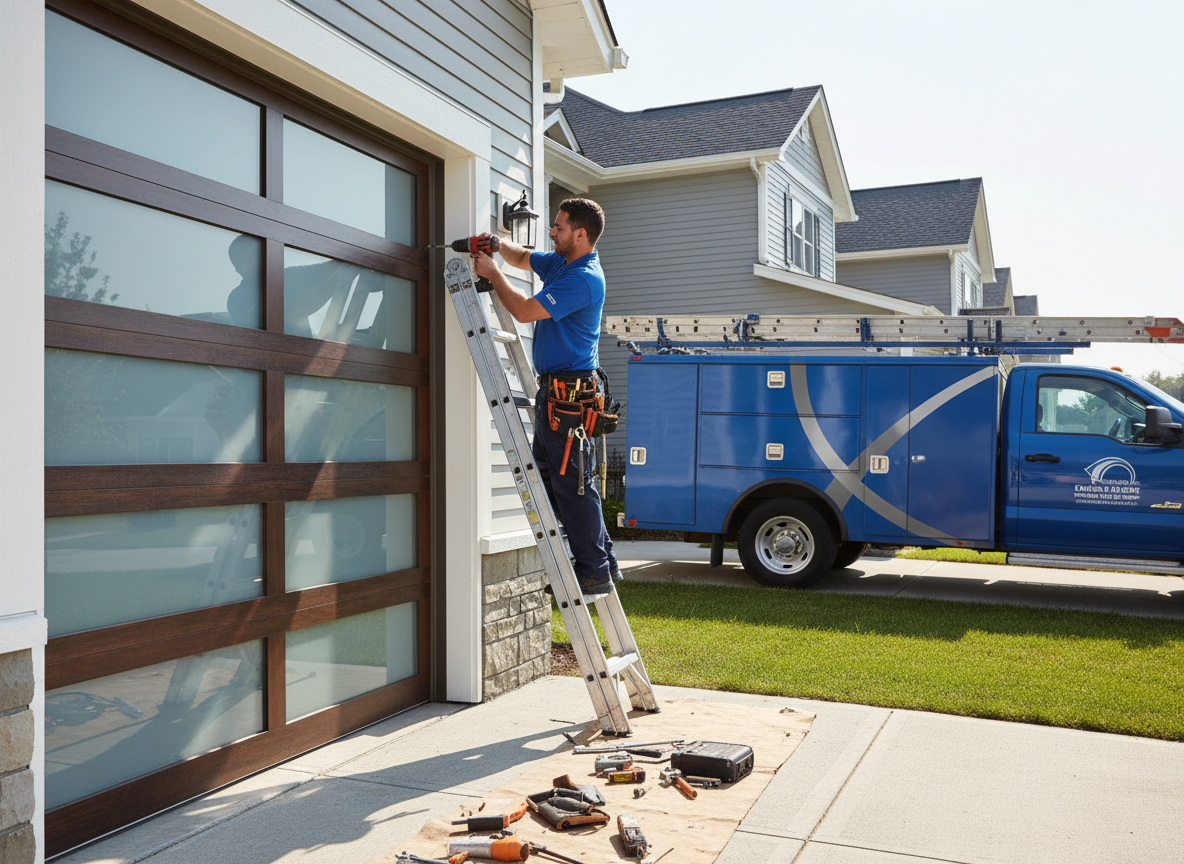
A garage door company is two businesses wearing one logo, and they do not get marketed the same way. Here's my default for most shops: fund the repair search first with Google Local Services Ads, a fully built Google Business Profile, and a steady stream of reviews, then point your install and replacement dollars at Meta with before-and-after photos and a financing offer. Repair pays the bills this week. A new door is the bigger ticket and the slower, more visual sale.
That split is the whole job. One side of the phone is a homeowner whose spring snapped this morning with the car trapped in the garage, searching "garage door repair near me" and hiring whoever answers and can come today. The other side is a homeowner who has stared at a tired steel door for three years and finally wants the $2,800 upgrade that changes the front of the house. Run one playbook for both and you either overspend chasing clicks for repair work that comes off the map, or you starve the install side that needs photos and reach.
Here's how I rank the channels, what each costs, and where garage door companies burn money.
What's the best way to market a garage door company?
Fund the repair search before anything else, then buy install reach, in that order: Google Local Services Ads and a fully built Google Business Profile with steady reviews for repair, then Meta ads with before-and-after photos and financing for new doors. Repair is a near-emergency booked on speed and proximity, so the money goes where the panicked search lands, the Google Guaranteed slot and the three-result map pack. A new door is a considered curb-appeal purchase, so it sells on the image and the monthly payment, which is where Meta earns its keep. The bad move is the reverse, pouring the whole budget into a broad brand campaign while your Business Profile sits half-filled, so you pay for reach while the highest-intent repair searches go to the company one map slot above you. Rank it the way I laid it out and you spend where the work comes from.
Why is marketing garage door repair different from selling a new door?
Because repair is a near-emergency bought on speed in minutes, and a new door is a $1,200 to $4,000 curb-appeal decision made over weeks. A broken spring, a dead opener, or a door off its track means the car is stuck, so the homeowner calls two or three companies and books whoever answers and shows up today, on a ticket that runs $200 to $700. A new door or full replacement is the opposite: nobody's trapped, the homeowner shops it, and the sale turns on how the door looks on the house and whether they can finance it. One brand can carry both, but the spend behind each pulls in a different direction, and the sections below split them so you stop funding one out of the other's budget.
How do you get more garage door repair calls?
Sit in the Google Guaranteed slot with Google Local Services Ads, hold a top-three spot in the map pack, and answer the phone on the first ring. Local Services Ads charge per lead instead of per click and sit above the map with the Google Guaranteed badge, and in an emergency search that badged top slot is the one that gets tapped. Plan on $1,000 to $3,000 a month for a single location, at roughly $15 to $45 per repair lead depending on the market. The map pack underneath it is fed by your Google Business Profile and your reviews, which cost nothing but the work. Speed closes it: a call that rolls to voicemail is a job lost to whoever picked up, because a homeowner with a trapped car does not leave a message. A shop working the suburbs around Chandler, Arizona, in 2024 gets more out of a Google Guaranteed slot and 40 recent reviews than out of a billboard, because the trapped-car search never looks up at a billboard. The trade-off: Local Services Ads book cold leads today, but the per-lead cost climbs when you skip the reviews that hold your rank, so run both.
How do you sell more garage door installations?
Put before-and-after photos of your own installs in front of homeowners in a tight radius, pair them with a financing offer, and make the door easy to picture on their house. A homeowner spending $2,800 buys with their eyes, so a real before-and-after, a builder-grade steel door swapped for a carriage-style or full-view aluminum one, does more than any headline you can write. Financing turns a $3,000 wince into a monthly payment they say yes to. Meta is the tool for this: draw a radius around the neighborhoods whose housing stock and age fit the upgrade, and put the before-and-after in the feed. For $500 to $1,500 a month you can own the feed in a handful of ZIP codes with a garage door install ad campaign on Meta. The trade-off is that this fills the higher-ticket calendar on a slower clock than repair, so it should never eat the repair budget that pays every week.
Do Facebook ads work for garage door companies?
Yes for new-door installs and replacements, and close to useless for booking an emergency repair. Nobody scrolling Instagram at 8pm is deciding who fixes the spring that broke at 8am; that buyer is on Google typing "near me." Meta wins the install side because the buyer is at home, relaxed, and a before-and-after photo of a door like theirs stops the thumb. Boosting a random post for $20 is not an ad, it hands Meta your money with no targeting and no offer and books nothing. Use Meta to sell doors and Google to catch repairs, and do not confuse the two.
Try us free
Want it designed right, without the guesswork?
Do vehicle wraps pay off for a garage door company?
Yes, because your install truck sits in a driveway on a visible street for most of a day, which is the cheapest neighborhood billboard you will ever run. Garage door work happens on the front of the house, in plain view of every neighbor who drives past, and a wrapped van parked at a six-hour install is seen by the exact homeowners with the same aging door two doors down. A full cargo-van wrap runs $2,500 to $4,000 in cast vinyl like 3M IJ180 or Avery, and it should carry one phone number big enough to read from three car lengths back and one line on what you do. Cheap lettering costs less and looks cheaper, and that is the trade. Get a garage door van wrap that matches the truck to the ads and the install photos, so the brand reads as one company everywhere it shows up.
How much should a garage door company spend on marketing?
Plan on 3 to 8 percent of revenue, weighted toward the repair search when repair is your bread and butter and toward Meta and photos when you push installs. A repair-heavy shop spends light and buys leads: Local Services Ads, a maintained Business Profile, and review automation through ServiceTitan or Housecall Pro, so a $700,000 company runs $2,000 to $4,000 a month with most of it in Local Services Ads and the map. An install-heavy company spends more because it buys reach and image: Meta radius campaigns, before-and-after photo shoots, financing creative, and a wrapped truck push it to $4,000 to $8,000 a month. The trade-off is plain. Spend repair money like an install company and you pay for reach while the emergency calls go to the shop above you on the map; spend install money like a repair company and you never build the photo library and reach a five-figure month of door sales needs.
Get the Local Services Ads and the Business Profile carrying the repair calls, point Meta and your photo library at the door sales, and wrap the truck that sits in the driveway all day. Keep every piece, the ad, the truck, the install photo, the review request, matched as one garage door brand so the homeowner who sees your van this week recognizes your ad next week. A flat-rate design plan keeps all of it consistent for one monthly cost, and your first design is free, so you can see it before you spend on print or ads.
Keep reading
Garage Doors branding & design →