How to Market a Flooring Business (and Sell the Room)
Flooring is a considered visual purchase, so photos and proof do the selling. Lead with your own finished-room shots, feed realtors and designers, feed Google reviews, and run before-and-after ads on Meta. Here's the ranking and the budget.
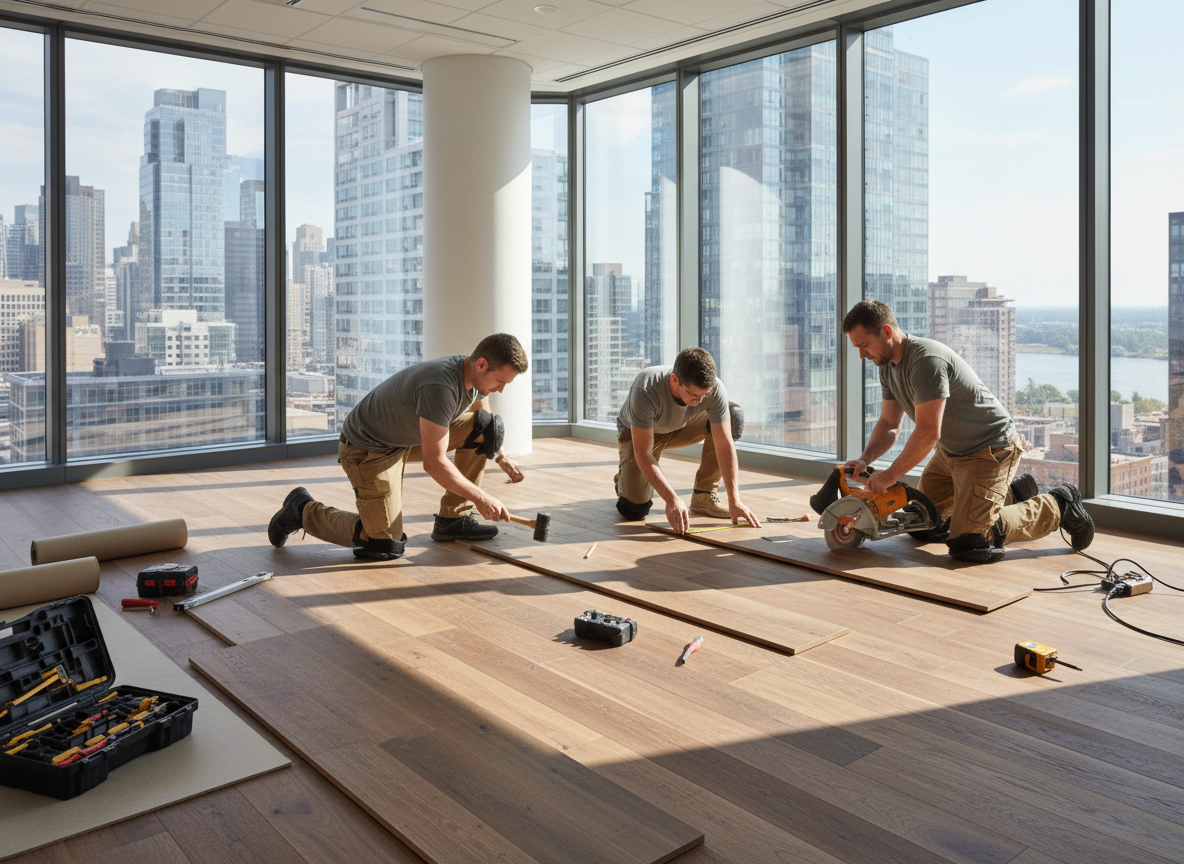
Flooring is a considered visual purchase, and that one fact decides how you market it. Here's my default for a residential flooring company: make photos of your own finished rooms the center of everything, feed the realtors, designers, and general contractors who hand you the job before a homeowner ever searches, own your Google Business Profile with a steady stream of reviews, and run before-and-after ads on Meta to the neighborhoods you want. Commercial flooring is a different animal, a bid-and-relationship business, so do not market the two the same way.
Nobody buys $9,000 of hardwood off a coupon. They see a floor they want in a room like theirs, then they check that you have done it before and that other people trust you. So the whole job is proof: pictures of your work, and reviews that back them up. A flooring company with a phone full of finished-room photos and 90 Google reviews out-sells a slicker competitor running stock images and nine reviews, every time.
Here's how I rank the channels, what each costs, and where flooring companies light money on fire.
What's the best way to market a flooring business?
Build a real portfolio of your finished installs, feed your referral partners, own your Google Business Profile with steady reviews, and run before-and-after ads on Meta, in that order. Photos come first because they are the product of the marketing: flooring sells on the image of the room, so a company with no gallery is selling on price alone. Referral partners come next because a realtor, a designer, or a general contractor hands you a pre-sold job with no ad spend behind it. Google catches the homeowner who searches "flooring installer near me" or "LVP installation" plus their town. Meta puts a room transformation in front of a homeowner scrolling on the couch, which is where a flooring decision gets made. The bad move is the reverse: dumping the whole budget into a broad Google Search campaign across a 30-mile radius, paying $10 to $20 a click for the word "flooring," or renting shared leads from Angi that get resold to four companies before you call back. Rank it the way I laid it out and you spend where the work comes from.
Why do before-and-after photos sell flooring better than anything else?
Because flooring is bought with the eyes, and a homeowner will not spend five figures until they have seen the exact floor in a room like theirs. This is a considered visual purchase, closed in the home or the showroom, where the sample board and the photo do the selling and the brochure copy does nothing. So shoot every finished job on a phone in good light: the wide shot of the room, and the detail that shows your craft, the stair nose, the transition strip, the tight seam, the border tile. Organize the gallery by material so a tile shopper sees tile and a hardwood shopper sees hardwood. The bad option is a website full of stock rooms, because a buyer smells a stock photo and starts to wonder what else is borrowed. A flooring company in a suburb like Gilbert, Arizona, that started photographing every finished job in 2023 walks into the next in-home quote with proof; the one shooting nothing is still arguing price on the doorstep.
How do flooring companies get leads from realtors, designers, and general contractors?
Build referral relationships with the people who control the room before the homeowner does, then make it dead simple for them to hand you the job. These partners send pre-trusted, repeat work that no ad can match, and each one is worth chasing:
- Realtors and home stagers. New floors before a listing, and flip investors who redo three houses a year.
- Interior designers. They spec your material into the project and bring the client with them.
- General contractors and remodelers. They sub out the flooring on every kitchen and whole-home remodel.
- Property managers and landlords. Turn-and-burn LVP between tenants, steady and unglamorous.
- Flooring retailers and big-box overflow. The installs the store sold but will not staff.
Give each partner a clean sample kit and a branded leave-behind, answer the phone when they call, and keep your truck, your crew, and your paperwork looking like one company. The realtor who trusts you sends work for a decade. That is the most durable lead source in the trade, and it costs a coffee and a fast callback, not a click.
How do flooring contractors get found on Google?
Claim and fully fill your Google Business Profile, set the category to Flooring Contractor or Flooring Store, and earn a review on every job, because that combination feeds the map pack where "flooring installer near me" lands. The profile is an hour of work an owner can do, not a $200-a-month "optimization" subscription some outfit cold-calls to sell you. On the paid side, Google Search ads work for flooring because it is a researched purchase and the buyer is already looking, with clicks at $6 to $20 in most markets. Google Local Services Ads charge per lead instead of per click and sit above the map with a Google Guaranteed badge, at $1,000 to $3,000 a month, if flooring is a live category in your market. Let Jobber text the review request the moment a job closes, so the ask goes out on every install instead of the ones you remember.
Do Meta ads work for a flooring company?
Yes, better than for most trades, because flooring is visual and the buyer is scrolling at home deciding what a room should look like. Meta (Facebook and Instagram) lets you draw a radius around the ZIP codes you want and drop a before-and-after reel or carousel in front of the homeowners inside it, for $500 to $1,500 a month. That is a strong fit for a $12,000 hardwood or tile project, where the image does the convincing and the buyer is in browse mode. Boosting a random post for $20 is not that; it hands Meta your money with no targeting and no offer, and it books nothing. Point a real room-transformation ad campaign on Meta at the neighborhoods you want to work. The trade-off: Meta sells the planned project and fills the calendar, but it will not catch the homeowner who needs a water-damaged floor replaced tomorrow the way a Google search will.
Try us free
Want it designed right, without the guesswork?
How is marketing a commercial flooring business different?
Commercial flooring is a bid-and-relationship business, so you sell to general contractors, architects, and facility managers, not to homeowners scrolling Instagram. The work comes off bid lists, plan rooms, and the estimators who know your number is real and your crew will hit the schedule, on jobs like schools, offices, retail build-outs, and healthcare that run epoxy, VCT, sheet vinyl, and commercial carpet tile. Meta room-transformation ads do nothing here. What still matters is looking legitimate on a job site: a wrapped box truck and a crew in branded shirts read as a real company to a superintendent, and that same wrapped truck sells the neighborhood on the residential side while it sits at a three-day install. Build the estimating relationships and a portfolio of finished commercial work, and let the residential channels run on their own track.
How much should a flooring company spend on marketing?
Plan on 4 to 8 percent of revenue for a growth-minded residential flooring company, and less if you run mostly on referrals and commercial bids. A referral-and-repeat shop spends light: a Google Business Profile, review automation, a strong photo gallery, a truck wrap, and the occasional Meta campaign put it near 3 to 4 percent. A company buying growth through paid channels spends more, because Google Search, Local Services Ads, and Meta all cost real money, which pushes it to 6 to 10 percent. In dollars, a $1.2 million residential flooring company at 5 percent runs about $5,000 a month, and most of that belongs in photos, Google, and Meta before a dollar goes to broad search. The trade-off is plain: spend it all on clicks and you rent leads that stop the day you stop paying, spend it on portfolio, referrals, and reviews and you build an asset that sends work for years, but it books slower this month.
Get a real photo library going, feed the realtors and designers who hand you the room, keep the Google profile and reviews fed, and point Meta at the neighborhoods you want. Keep the truck, the sample kit, the ads, and the site matched as one flooring brand so the room a homeowner saved on Instagram matches the crew that shows up at the door. A flat-rate design plan keeps all of it consistent for one monthly cost, and your first design is free, so you can see it before you spend on print or ads.
Keep reading
Flooring branding & design →