How to Make a 12-Truck Fleet Look Like One Company
Design the wrap once as a master template, then adapt it to every make and model. That's how 12 trucks read as one company instead of 12 one-offs. Costs, rollout order, and what to standardize.
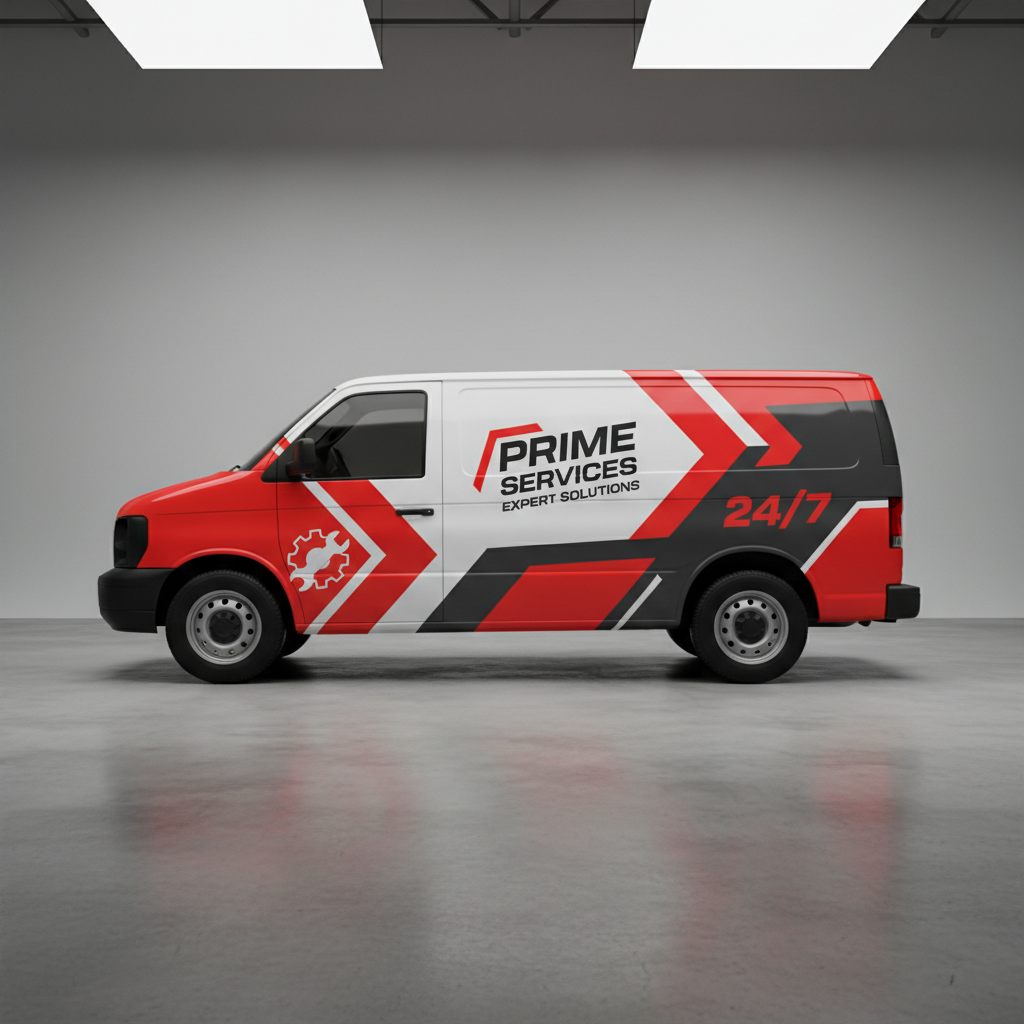
Design the wrap once as a master template, then adapt that one design to every make and model in the fleet. That's the difference between 12 trucks that read as one company and 12 one-offs that happen to share a logo. The layout, colors, message hierarchy, and phone-number placement are fixed; only the panel dimensions change from van to pickup to box truck.
A fleet is the loudest advertising a trade company owns. Twelve consistent trucks moving around a metro build recognition no ad budget matches. Twelve inconsistent ones look like a company that can't keep it together. Here's how to run it.
How do you make a fleet look like one company?
One master wrap design, adapted to each vehicle type, ordered from the same file every time. The customer should see the same layout, colors, and big number whether it's the van in their driveway or the box truck at the supply house. Recognition comes from repetition, and repetition needs one design, not a dozen.
The mistake is letting each truck get wrapped whenever and wherever, so the 2019 van has last year's layout and the new pickup has a bigger logo. Lock the master, and every truck that gets wrapped or replaced pulls from it. Ten years of trucks should still match.
Try us free
Want it designed right, without the guesswork?
Should a fleet be fully wrapped or lettered?
Wrap the high-visibility trucks, letter the rest, and keep them all on the same design language. A full wrap runs $3,000 to $6,000 a truck and turns it into a rolling billboard; clean lettering runs $300 to $800 and still reads as professional. On a big fleet you can't always wrap everything, and you don't have to.
Wrap the trucks that sit in driveways and busy streets all day, because that's paid billboard time. Letter the ones that live at the shop or a yard. Make sure the lettering uses the same colors, font, and number placement as the wraps, so a lettered truck reads as the cheaper version of the same brand, not a different company.
How much does it cost to brand a fleet?
Roughly $300 to $800 a truck for lettering and $3,000 to $6,000 for a full wrap, plus one design cost for the master that every truck reuses. A mixed fleet of 12 runs $25,000 to $50,000 to brand fully, spread over the rollout, not paid at once.
The design is the cheap part and the part that matters most: pay once for a master built to spec, then every truck is a print-and-install against that file. A fleet wrap system designed on a flat monthly plan means new trucks match the fleet without a fresh design bill each time. Spread the print and install across a year or two, and brand the highest-visibility trucks first.
How do you wrap trucks that are different makes and models?
Build the master design to adapt: the same layout logic applied to each vehicle's real panels, door handles, and body lines. A wrap isn't one flat image stretched over anything; it's a design laid out to each specific make and model so the number and logo land in the right place on a Transit, an F-250, and a box truck alike.
That's why a fleet needs a designer who works to spec, not a shop that prints one file for everything. The van and the pickup have different door heights and window lines, so the same design gets re-laid to each, keeping the look identical while fitting the metal. Done right, they match at a glance despite being different trucks.
In what order should you roll out a fleet rebrand?
Highest-visibility trucks first, then the rest as budget and schedule allow. Start with the trucks that spend the most time in front of customers, because those return the fastest. The truck that hides at the shop can wait.
Do it in waves, not all at once, so you spread the cost and keep trucks working. A common shape: wrap the top two or three earners this quarter, letter the mid-tier, and roll the rest in as trucks come due for replacement. New trucks get the current master the day they hit the road.
How do you keep the fleet consistent as you add trucks?
Keep the master file and a short spec sheet, and order every new truck against it. The fleet drifts the moment someone eyeballs a new wrap or a different shop reinterprets the design. One file, one spec, every truck.
Write down the colors, the film (cast vinyl like 3M IJ180 with laminate), the layout, and the install notes, so any shop in any city can produce a matching truck. When you add a location or replace a van, the wrap is a reorder, not a redesign. That's how a fleet still matches after ten years and three cities.
What makes a fleet look unprofessional?
Mismatched trucks, faded old wraps next to fresh ones, and magnets on trucks that earn their living. Nothing says "we don't have it together" like three trucks in three slightly different looks parked at one job.
The other tells: a wrap printed with no laminate that faded to pink in two years, a truck still carrying the old logo after a rebrand, and slapped-on magnets that read as temporary. Retire old wraps on schedule, keep every truck on the master, and the fleet reads as one established company. Skip that, and you pay to advertise looking disorganized.
Keep reading
Contractor branding & design →