How to Market a Fence Company (and Keep the Pipeline Full)
You install a fence once and that customer is gone for 15 years, so you rebuild the pipeline every month. Turn every finished fence into a yard sign, work the street with door hangers, feed Google reviews, and run Meta for the big material jobs. Here's the ranking and the budget.
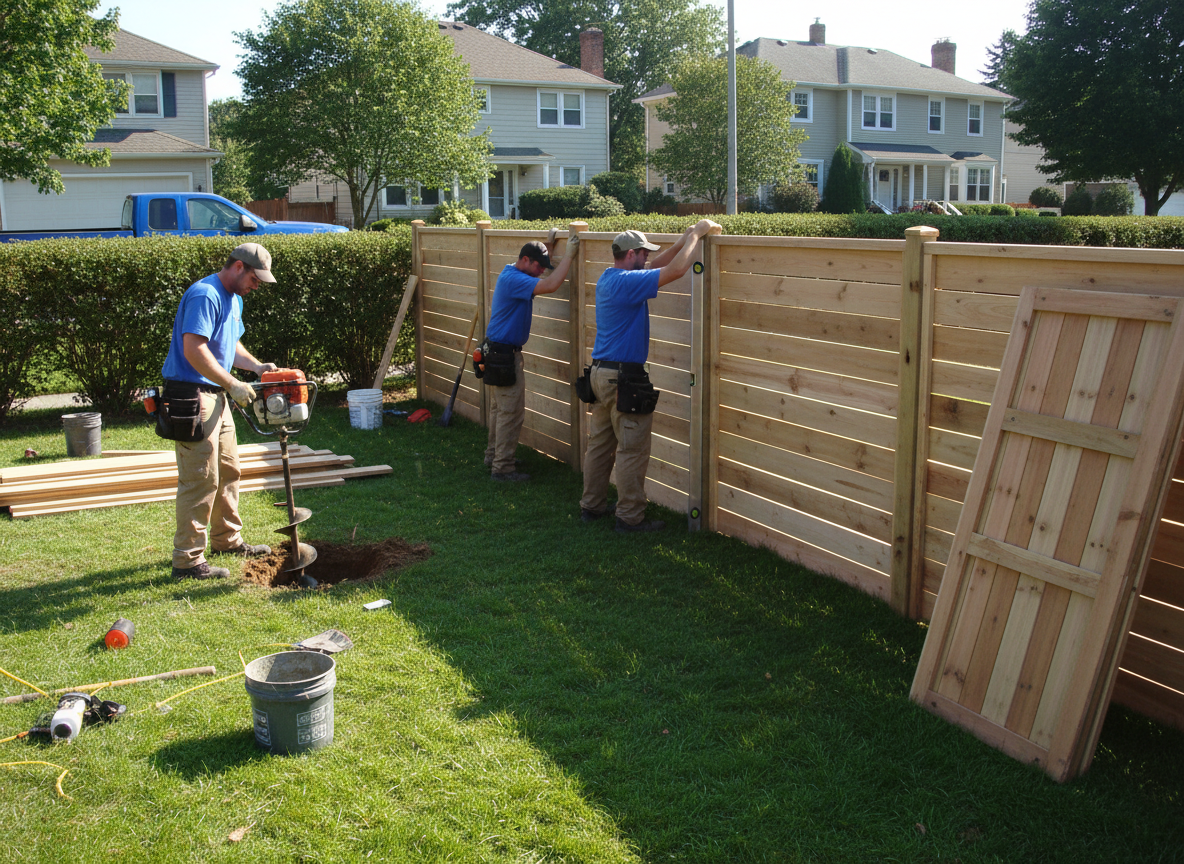
Put a branded yard sign on every fence you finish, canvass the 20 to 40 houses around it with door hangers, lock down your Google Business Profile and work a review on every job, and run Meta before-and-after ads to fill the spring and summer calendar. That is my default for a fence company, and it starts with the one advantage no other trade gets for free: a finished fence is a 150-foot billboard facing the street, and the neighbors look at it every day.
Here is what makes fencing hard. You install a fence once, and that customer is done with you for 15 years. There is no monthly account, no re-up, no route. Every job you close, you close for good, which means every month you start the pipeline over from zero. A plumber gets called back. You have to go find the next yard.
So the whole game is cheap, repeatable lead flow that refills the board faster than you empty it. Here is how I rank the channels for a fence company, what each costs, and where I watch owners set money on fire.
What's the best way to market a fence company?
Turn every install into an ad, then back it with Google. Stake a branded yard sign on each finished fence, drop door hangers on the surrounding street while your truck is still parked there, claim and fill your Google Business Profile, earn a review on every job, and put paid Meta and Google dollars behind the bigger material jobs. Fencing is a proximity-and-proof business: the work is bolted to a front yard where the whole block sees it, so the cheapest lead you will ever get is the neighbor who watched you build it. Google catches the homeowner who already decided to replace the fence and searched "fence company near me." Paid ads and financing offers close the $8,000-plus jobs that carry the spend. The bad move is skipping the free billboard in your own finished work and dumping the whole budget into a wide Google Ads radius, paying $12 a click for strangers 25 miles out while the three houses next to your last job never hear from you.
Why is marketing a fence company harder than marketing a plumber?
Because fencing is project-based with no repeat business, so you rebuild the pipeline every month instead of coasting on recurring accounts. A plumber or an HVAC shop banks on service calls and maintenance plans from the same customers for years. You install a cedar privacy fence once and that homeowner does not need you again for 15 years. That one fact drives every decision below: you cannot afford expensive leads the way a company with lifetime customer value can, and you cannot let a slow month empty the board, because there is no maintenance revenue underneath to catch you. So the marketing has to be cheap per lead and always running. The trade-off is that the tactics that win, signs and door hangers and reviews, are slower and less glamorous than flipping on an ad, and they only compound if you work them on every job instead of the ones you remember.
What's the cheapest way to get fence leads?
A yard sign on every finished fence plus door hangers on the street around it, which costs a few dollars per job and puts your name in front of the exact people most likely to buy. A new fence is the most visible thing that happens on that block all year, and half the neighbors are looking at their own gray, leaning 18-year-old fence while they stare at your fresh one. Stake a branded yard sign at the property line the day you finish, and while the crew loads out, walk door hangers to the 20 to 40 houses with a sight line to the work. The economics are hard to beat: a 4mm coroplast yard sign runs $8 to $15 with an H-stake, and door hangers print at $0.15 to $0.40 each, so blanketing a whole street costs less than two clicks on Google Ads. A fence company working a subdivision around Frisco, Texas, in 2024 gets more mileage out of canvassing the four streets around each install than out of a metro-wide ad blast, because fences replace in clusters: once one neighbor upgrades, the block tends to follow over the next two seasons.
Does the type of fence you sell change how you market it?
Yes, because wood, vinyl, aluminum, and chain-link sell to different buyers at different tickets, and the photos and offers have to match. Wood (cedar or pressure-treated pine) is the volume seller for residential privacy, roughly $15 to $35 a foot installed, bought on looks and price. Vinyl runs $25 to $40 a foot and sells on "never paint it again," so the pitch is low maintenance to a homeowner who plans to stay. Aluminum and ornamental fence, $30 to $60 a foot, is the pool-code and curb-appeal buyer who wants it to look sharp. Chain-link, $10 to $20 a foot, splits between the budget residential buyer and commercial and industrial work, which is a separate sale to a GC or property manager on bid, not a homeowner scrolling Instagram. So one brand, but the ad targeting and the gallery split by material: put vinyl privacy in front of settled homeowners, aluminum in front of pool and higher-end neighborhoods, and chase commercial chain-link through relationships and bid sites, not Meta.
Do Facebook and Instagram ads work for fence companies?
Yes, better than for most trades, because a fence is a before-and-after product and Meta is built to sell with a photo. A tired, sagging fence next to your finished cedar or vinyl run is the whole pitch in one image, and you can draw a radius around the neighborhoods and income levels you want and put that image in front of homeowners scrolling at night. For $300 to $1,000 a month in Meta before-and-after fence ads, you can own the feed across a handful of ZIP codes and feed the spring and summer pipeline. Two things lift the results: lead with real material photos, not stock, and put a financing offer in the ad, because "0 percent for 12 months" turns a $9,000 vinyl job from a someday into a this-spring. Boosting a random post for $20 is not a campaign; it hands Meta your money with no targeting and no offer and books nothing. Run a real ad with a real photo and a real offer, or skip it.
Try us free
Want it designed right, without the guesswork?
When should a fence company spend its marketing money?
Spend it 6 to 8 weeks ahead of the season, which means the heaviest push runs in late winter and early spring before the phone rings on its own. Fencing is seasonal across most of the country: the calls climb as the ground thaws and yards open up, peak through spring and summer, and taper after the first freeze. The companies that own spring did their marketing in January and February, when a door-hanger drop and a "book your spring install" offer lock the backlog before the rush. The mistake is going quiet all winter and then trying to buy leads in April at peak competition and peak cost. Use the slow months to build the sign template, the site, and the photo library you never have time to touch in July, so the marketing is already running when the season turns. In a market with real winter like Columbus, Ohio, that off-season prep is the difference between a booked spring and a scramble.
How much should a fence company spend on marketing?
Plan on 5 to 10 percent of revenue, weighted toward cheap local reach and paid ads for the high-ticket material jobs. For a $1 million fence company, that is $50,000 to $100,000 a year, and I would split it roughly: a quarter into signs, door hangers, and a wrapped work truck that advertises at every jobsite; a quarter into the Google Business Profile, reviews, and a fast site; a quarter into Meta and Google ads pointed at the vinyl and aluminum jobs; and the rest into brand plus the photo and financing setup that lifts close rate. Financing is not a marketing line, but it belongs in the conversation: offering a plan through a provider like Wisetack or Hearth turns more $10,000 quotes into signed jobs than another $500 in ad spend would. The trade-off is patience. This mix builds a name on the streets you work and a review base that compounds, which is slower than buying a pile of shared leads, and unlike those leads it still pays you in three years.
Get a yard sign on every finished fence, keep the door hangers and reviews working the blocks you already build on, and point paid dollars at the vinyl and aluminum jobs that can carry them. Keep the sign, the hanger, the truck, and the ad matched as one fencing brand so the homeowner who sees your sign this month recognizes your ad next month. A flat-rate design plan keeps all of it consistent for one monthly cost, and your first design is free, so you can see it before you spend a dollar on print or ads.
Keep reading
Fencing branding & design →