Electrician Branding 101: Build a Brand Homeowners Trust
A homeowner can't judge the wiring behind the wall, so they judge the van, the shirt, and the card instead. That's your brand doing the work, and for electrical it carries more weight than almost any trade.
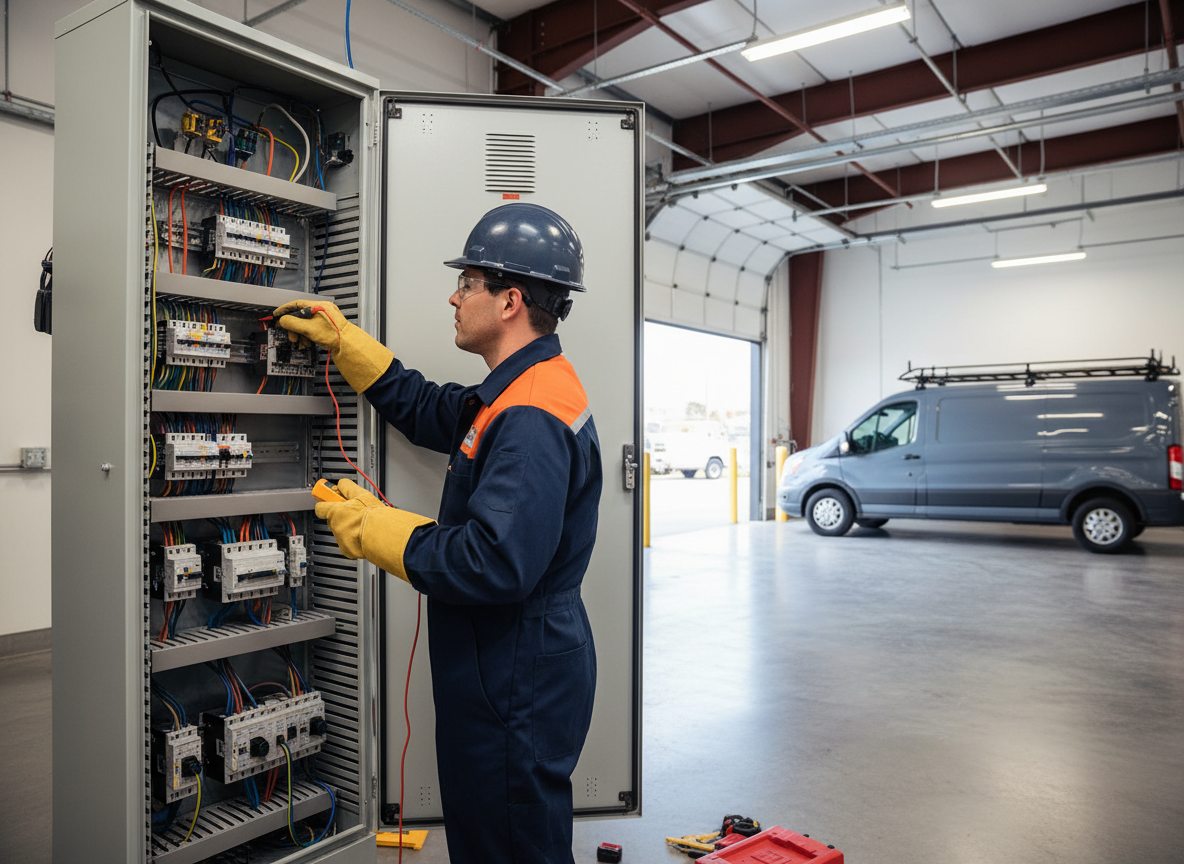
A homeowner is about to let a stranger open their electrical panel and pull new wire through the walls of the house they sleep in. Before that electrician says a word about scope or price, the homeowner has already guessed how far to trust him, and they guessed from the van in the driveway, the shirt, and the card he hands over. That guess is your brand, working for you or against you.
Most electricians think branding is the logo. The logo is one part. Branding is the whole impression, and for electrical work, where hiring wrong can mean a fire or a failed inspection, that impression carries more weight than in nearly any trade. Here's what an electrician's brand is, why it lets you charge more, and where shops leave money on the table.
Is a logo the same thing as electrician branding?
No. The logo is one component. Your brand is every signal a customer reads before, during, and after the job: the wrapped or lettered van, the license number on the door, the crew shirt, the printed quote, the yard sign, and how the phone gets answered. The logo is where the visual system starts, not where it ends. An electrician with a sharp logo and a beat-up unmarked van has a logo, not a brand.
Why does a homeowner judge an electrician on how they look?
Because they can't judge the wiring. A homeowner can't tell good work behind a wall from bad, and they know it, so they read the signals they can see: does this person look organized, licensed, and permanent? A clean van, a shirt with a name on it, and a professional quote answer "will this be done right and to code?" before you open your mouth. That's why the same estimate wins from a branded shop and loses from a guy in an unmarked truck.
Try us free
Want it designed right, without the guesswork?
What pieces make up an electrician's brand?
The minimum system, in the order a customer meets it:
- The van, wrapped or lettered, license number visible.
- The crew: a shirt with the logo, and a tidy look.
- The quote, on real letterhead, not a torn-off sheet.
- The card and panel sticker left behind after the job.
- The yard sign on the visible installs.
- The logo and colors tying all of it together.
Every one of those either looks like the same established company or looks scattered. There is no neutral.
How does branding let an electrician charge more?
By removing the homeowner's reason to shop on price. When you look established and licensed, the higher quote reads as the safe choice, not the expensive one, and safety is exactly what a homeowner is buying when the downside is an electrical fire. Shops that look like a real company routinely hold a 10 to 20 percent premium over the low bid, because the low bid also looks like the risky bid. Cheap branding forces you to compete on price, which is the one competition in this trade nobody wins.
What does it cost to build an electrician brand?
Bought piece by piece, a logo runs $500 to $3,000, a van wrap $3,000 to $6,000 or lettering $300 to $800, plus shirts, cards, and signs as you go. Assembled that way from different vendors, the pieces rarely match, and you pay again to fix the mismatch. A flat-rate design plan builds the whole system to one standard for a predictable monthly cost, which for a growing shop is both cheaper and more consistent than sourcing it from five suppliers.
Where do electrical shops get branding wrong?
Three ways, over and over. They stop at the logo and never build the system around it. They buy the van from one shop, the cards from another, and the shirts from a third, so nothing lines up. And they copy every competitor: the same electric blue, the same lightning bolt, which makes them invisible in a row of blue-bolt vans. The fix for all three is the same: build it once, to one plan.
Get the logo, colors, van, cards, and signs designed as one electrician brand, starting from a real logo and brand system, and every job site turns into an ad for the same recognizable company. Your first design is free, so you can see the system on your own van before you spend a dollar on print.
Keep reading
Electrical branding & design →