How to Market a Cleaning Business (Maid Service and Janitorial)
You run two businesses under one word: recurring house cleaning and commercial janitorial. Residential grows on reviews, referrals, and a tight neighborhood; commercial grows on outreach and bids. Here's the ranking and the budget for each.
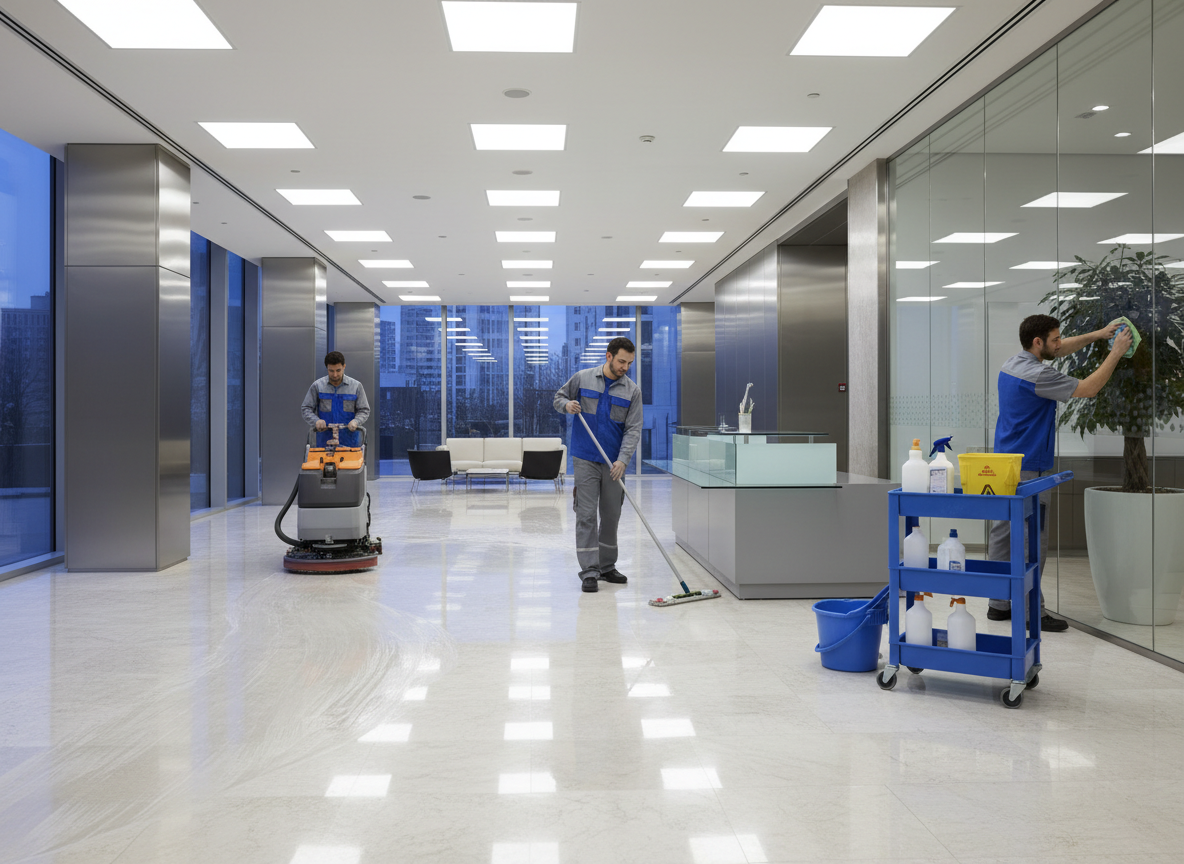
Two cleaning companies can print the same word on the door and run businesses that share almost nothing. Here's my default. If you clean houses, put your money into a filled-out Google Business Profile, a steady stream of reviews, a referral program that pays, and a tight neighborhood footprint, then add Meta for reach. If you clean offices and buildings, close the ad account and spend that time on B2B outreach, sharp proposals, and the facility managers who sign the contracts. Same trade, two playbooks.
The split matters because both sides live on recurring revenue. A biweekly house-cleaning client is worth $250 to $400 a month and stays for years if you keep them happy. A commercial janitorial contract is worth $500 to $8,000 a month and gets won on a bid and a handshake, not a Google click. Run one plan for both and you overspend chasing clicks on the commercial side while starving the reviews and referrals that grow the residential side.
Here's how I rank the channels for each side, what they cost, and where cleaning companies burn money.
What's the best way to market a cleaning business?
Claim and fill your Google Business Profile, earn reviews on every job, run a referral program with a real incentive, and work a tight neighborhood radius, in that order for residential; for commercial, lead with direct B2B outreach and proposals instead. House cleaning is a trust-and-proximity game, so the money goes where trust lives: your review count, the neighbor who saw your car three doors down, and the friend who got $50 off for sending you. Paid ads come after that for residential and rarely for commercial. The commercial side does not run on search at all; it runs on a rep walking into an office park with a proposal. The bad move is a janitorial company pouring $1,500 a month into Google Ads for "office cleaning" while never knocking on the fifty doors in the plaza next door.
Why do residential and commercial cleaning need different marketing?
Because residential sells trust to a homeowner one house at a time, and commercial sells reliability and price to a business through a bid, so the buyer, the ticket, and the sales motion are all different. A homeowner hands you a key and lets you into an empty house, so they buy on reviews, referrals, and how safe you feel, and they find you by searching or asking a neighbor. A facility manager buys on your bid, your insurance, and whether you show up when the last company stopped, and they find you because you called them or a property manager passed your name along. One is a consumer problem you solve with reviews and reach; the other is a sales problem you solve with outreach. The sections below split them so you stop funding one out of the other's budget.
How do house cleaning companies get more recurring clients?
Lock down your Google Business Profile, earn a review on every clean, and work a tight neighborhood radius so your route stays dense. The profile is the highest-return free thing you own: set the category to House Cleaning Service, fill every field, add real photos of your team and finished rooms, and keep the reviews flowing, because the map pack (the three local results above the blue links) is where "maid service near me" lands. Density does the quiet work. A house-cleaning company running a subdivision around Chandler, Arizona, in 2024 fills its schedule faster from the neighbors who watch the branded car pull in twice a month than from a metro-wide ad blast. Put a magnet or a small vehicle graphic on the company car so every visit advertises to the block. Reviews are the tiebreaker, so let Jobber, Housecall Pro, or ZenMaid text the request the minute the job closes.
Do referral programs work for a maid service?
Yes, better than almost any paid channel, because a house cleaner works inside someone's home and referrals ride on that trust. A homeowner will not hand a stranger a key on a whim, but they will trust the cleaner their sister has used for two years, so a referral converts at a rate no cold ad touches. Make it a real program, not a hope: give the existing client and the new one each $25 to $50 off their next clean, ask for the referral in person after a clean they loved, and print the offer on a business card the client can hand a neighbor. Nextdoor is the digital version, where "can anyone recommend a house cleaner?" posts run daily, so a few genuine client shout-outs there outwork a boosted post. The trade-off: a referral discount costs you margin on two cleans, and it buys a client who stays for years, the cheapest lifetime value in the trade.
How do you land commercial cleaning contracts?
Through direct B2B outreach and a clean proposal, not through ads, because office, medical, and retail cleaning gets bought by a facility or property manager comparing bids. Build a target list of the buildings you can service, then get in front of the decision maker: walk the office parks and medical plazas, call property management companies, and ask for a walkthrough. Commercial janitorial is priced per square foot, often $0.05 to $0.20 per square foot per month depending on the building and frequency, so a proposal that spells out scope, frequency, insurance, and price wins over a vague quote. Relationships hold the contract once you have it: the property manager who trusts you to cover a building five nights a week hands you the next building too. A sharp proposal and leave-behind makes a stranger's bid feel safe, the way a homemade one gets tossed. Google and Meta do close to nothing here, so skip them for commercial and spend the hours on the list.
Do Facebook and Instagram ads work for a cleaning company?
Yes for residential house cleaning, and close to worthless for commercial janitorial. Meta (Facebook and Instagram) lets you draw a radius around the neighborhoods you want and put a "first clean $99, then biweekly" offer in front of homeowners inside it, which works because house cleaning is a home-life purchase people decide on the couch. Budget $300 to $1,000 a month for a real campaign with a clear offer and a booking link. What does not work is boosting a random post for $20; that hands Meta your money with no offer and no targeting and books nothing. A dedicated neighborhood social ad campaign beats the boost button every time. For commercial, skip paid social: no facility manager picks a janitorial vendor off an Instagram ad, and that budget belongs in outreach.
Try us free
Want it designed right, without the guesswork?
Why does keeping clients matter more than finding new ones?
Because cleaning runs on recurring revenue, so a client who churns after two cleans erases the cost of winning them, while one who stays two years is profit on work you already sell. A maid service that loses 10 percent of its accounts a month is filling a leaky bucket, and no ad budget outruns that drain. The fix is retention, not more leads: send the same cleaner to the same house so the client builds a relationship, run a quality check after the first few cleans, and fix a complaint the same day instead of losing the account over it. Software like Jobber or Housecall Pro keeps the schedule, the reminders, and the card on file so rebooking is automatic. Get a five-star client to stay and refer before you spend on finding a new one, because the math only works if they stay.
How much should a cleaning company spend on marketing?
Plan on 6 to 10 percent of revenue for a residential house-cleaning company and 2 to 5 percent for a commercial janitorial one, because they buy growth in opposite ways. Residential spends more on media: review automation, a referral program, and $300 to $1,000 a month in Meta plus Google Local Services Ads (which charge per lead at $1,000 to $3,000 a month) push a $500,000 maid service to $2,500 to $4,000 a month. Commercial spends less on ads and more on people, because a bid-and-relationship business grows on a rep's time and a good proposal, not a media budget, so a janitorial company of the same size runs $1,000 to $2,000 a month on outreach, proposals, and print. The trade-off is plain: spend residential money like a janitorial company and your route stalls for lack of reviews and reach; spend janitorial money like a maid service and you pay for clicks no facility manager ever taps.
Get the Google Business Profile and reviews working, put a referral program in front of every happy client, and keep the residential route dense; on the commercial side, work the list and win on the proposal. Keep every piece, the car magnet, the card, the ad, the bid, matched as one cleaning company brand so the homeowner who sees your car this week recognizes your postcard next week. A flat-rate design plan keeps all of it consistent for one monthly cost, and your first design is free, so you can see it before you spend on print or ads.
Keep reading
Cleaning branding & design →